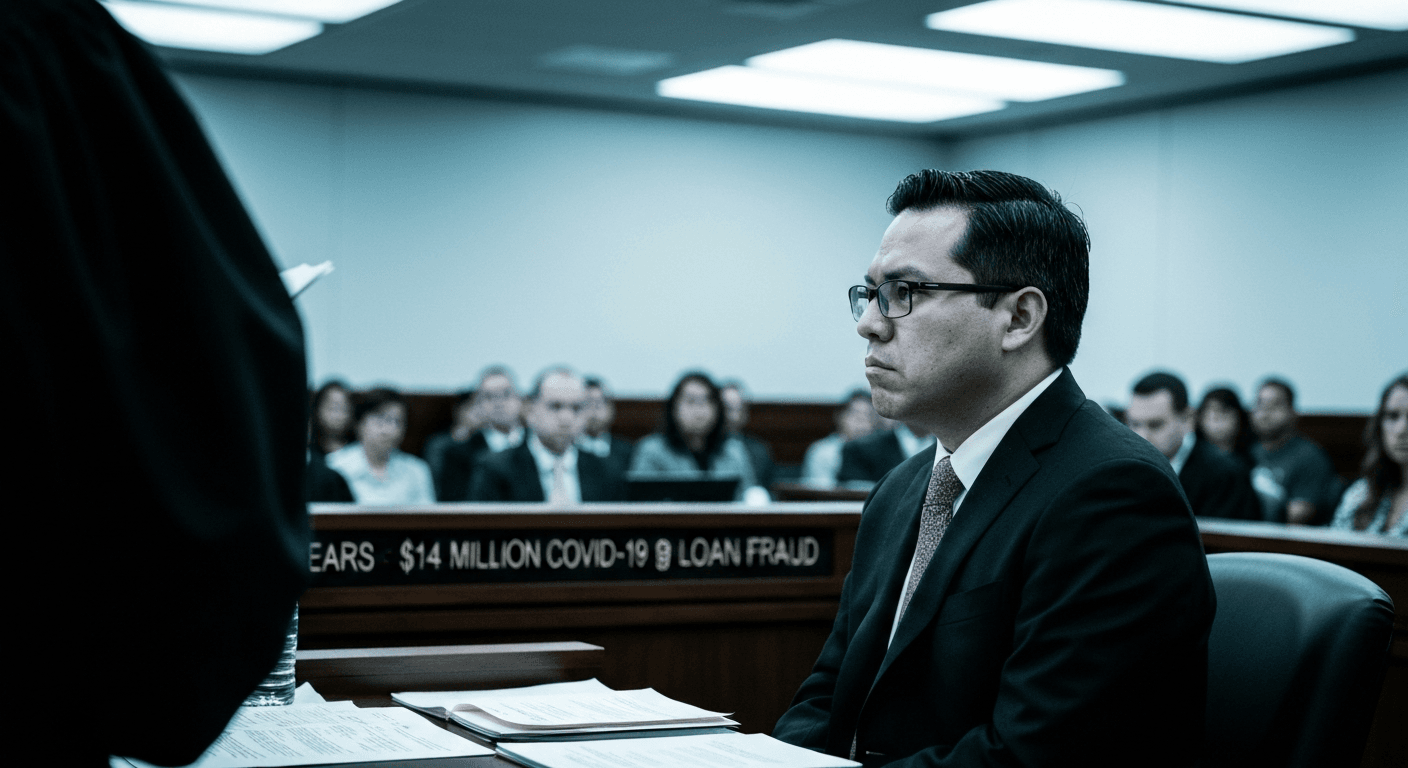
The COVID-19 pandemic unleashed unprecedented economic disruption, prompting governments worldwide to implement massive relief programs. While these programs provided a crucial lifeline for struggling businesses and individuals, they also created fertile ground for fraud. The case of Sharhabeel Shreiteh, a Chicago-area tax preparer sentenced to 10 years in prison for a $14 million COVID-19 loan fraud, serves as a stark reminder of the vulnerabilities inherent in emergency relief efforts and the severe consequences faced by those who exploit them. This case is not an isolated incident; rather, it is a symptom of a broader trend of pandemic-related fraud that continues to plague the financial system, demanding increased vigilance and robust preventative measures from both regulators and financial professionals. The Shreiteh case underscores the ethical and professional responsibilities of tax preparers, highlighting the potential damage that can be inflicted on the integrity of the tax system and the economy as a whole.
What's Happening: The Shreiteh Case Unveiled
Sharhabeel Shreiteh's scheme involved submitting over 1,500 falsified applications for COVID-19 relief loans, primarily through the Paycheck Protection Program (PPP) and Economic Injury Disaster Loan (EIDL) program. The PPP, administered by the Small Business Administration (SBA), provided forgivable loans to small businesses to cover payroll costs during the pandemic. The EIDL program offered low-interest loans to small businesses and non-profit organizations experiencing financial hardship. Shreiteh exploited these programs by fabricating information on behalf of his clients, inflating payroll expenses and creating fictitious businesses to qualify for loans they were not entitled to receive.
The investigation revealed a sophisticated operation where Shreiteh actively coached clients on how to answer questions on the loan applications and provided fabricated documentation to support their claims. He then pocketed a substantial portion of the loan proceeds as fees for his services, enriching himself at the expense of taxpayers and legitimate businesses struggling to survive the pandemic. The Justice Department's prosecution of Shreiteh underscores the government's commitment to holding individuals accountable for pandemic-related fraud, sending a clear message that such behavior will not be tolerated. The 10-year sentence reflects the severity of the crime and the significant financial losses incurred by the government and taxpayers. This case also highlights the importance of whistleblowers and informants in uncovering fraud schemes, as tips from individuals familiar with Shreiteh's activities played a crucial role in the investigation.
Industry Context: A Landscape Rife with Fraud
The Shreiteh case is just one example of the widespread fraud that occurred during the pandemic. The SBA's Office of Inspector General (OIG) has estimated that potentially billions of dollars in PPP and EIDL funds were disbursed fraudulently. A report by the Pandemic Response Accountability Committee (PRAC) identified significant vulnerabilities in the design and implementation of the relief programs, including inadequate controls to prevent fraud and insufficient verification of applicant information.
The sheer volume of applications processed during the pandemic overwhelmed the SBA and participating lenders, making it difficult to detect fraudulent activity. The urgency to get funds into the hands of businesses quickly led to a relaxation of standard underwriting procedures and a reliance on self-certification by applicants. This created an environment ripe for exploitation by unscrupulous individuals and organizations. Compared to traditional lending practices, the PPP and EIDL programs lacked the stringent due diligence and risk assessment processes typically employed by banks and other financial institutions. This allowed fraudsters to slip through the cracks and obtain loans based on false or misleading information.
Furthermore, the lack of coordination and data sharing between different government agencies hindered efforts to detect and prevent fraud. For example, the IRS and the SBA did not have a seamless system for verifying applicant information, making it difficult to identify individuals who were submitting multiple applications or using stolen identities. This fragmented approach to fraud prevention allowed fraudsters to operate with relative impunity. The Shreiteh case highlights the need for a more coordinated and proactive approach to fraud detection and prevention, involving collaboration between government agencies, financial institutions, and the accounting profession.
Why This Matters for Professionals: Ethical Obligations and Risk Mitigation
The Shreiteh case has significant implications for tax preparers, accountants, and other financial professionals. It underscores the importance of adhering to ethical standards and professional responsibilities when providing services to clients. Tax preparers have a duty to act with integrity, objectivity, and due professional care. They must not knowingly participate in fraudulent or illegal activities, and they have a responsibility to exercise reasonable skepticism when reviewing client information.
Specific action items for professionals include:
- Enhanced Due Diligence: Implement more robust due diligence procedures to verify the accuracy and completeness of client information. This may involve independently verifying income, expenses, and other relevant data.
- Client Education: Educate clients about the requirements of government relief programs and the consequences of submitting false or misleading information.
- Risk Assessment: Conduct a thorough risk assessment to identify clients who may be at higher risk of engaging in fraudulent activities.
- Documentation: Maintain detailed documentation of all client interactions and the steps taken to verify information.
- Continuing Professional Education (CPE): Participate in CPE courses on fraud detection and prevention.
- Internal Controls: Implement strong internal controls to prevent fraud within your own practice.
- Reporting Suspected Fraud: Report any suspected fraud to the appropriate authorities, such as the IRS or the SBA.
The Shreiteh case also highlights the importance of protecting your firm from liability. Tax preparers can be held liable for penalties and damages if they negligently or intentionally participate in fraudulent activities. To mitigate this risk, firms should consider implementing quality control procedures, providing training to staff on ethical standards, and obtaining professional liability insurance. The AICPA provides resources and guidance on ethical standards and professional responsibilities for CPAs.
The Bottom Line: Prevention is Paramount
The Sharhabeel Shreiteh case serves as a cautionary tale, emphasizing the importance of ethical conduct, robust due diligence, and proactive fraud prevention measures within the accounting and tax preparation professions. The pandemic-era fraud exposed vulnerabilities in government relief programs, highlighting the need for stronger controls and increased vigilance. As financial professionals, we must learn from these experiences and take steps to protect ourselves, our clients, and the integrity of the financial system. Proactive measures and a commitment to ethical behavior are the best defenses against the allure and consequences of fraud.
Fintech.News Desk
Editorial TeamThe Fintech.News Desk covers the latest developments in fintech, accounting technology, tax regulation, and AI in finance. We combine AI-assisted research with editorial review to deliver analytical news coverage for finance professionals.
Enjoyed this article?
Get stories like this first on our Telegram channel. Subscribed by thousands of fintech leaders.
Join us on TelegramRead Next

IRS Issues Final Regs on Occupations Eligible for OBBBA Tips Deduction
Final IRS regs on OBBBA tip tax deductions are here. See if your occupation qualifies for "no tax on tips" under the new rules. Key details for fintech & accoun

Sen. Tillis aims to release draft resolving Clarity Act's stablecoin yield dispute this week: report
Sen. Tillis to release Clarity Act draft this week, resolving the stablecoin yield dispute. Get the latest on crypto regulation & potential rewards impact.
US Justice Department opens claims for victims of $4 billion OneCoin fraud
OneCoin victims can now file claims with the DOJ for a share of $4B in recovered assets. Learn about eligibility & the recovery process.

Japan Prepares to Regulate Crypto as a Financial Product
Japan to regulate crypto under FIEA. Deep dive into potential reclassification, impacting exchanges & global fintech. Stay ahead of evolving regulations.

FBI says crypto-related fraud losses hit record $11.4 billion in 2025, with seniors bearing the brunt
FBI: Crypto fraud losses surged to $11.4B in 2025. Protect your clients, especially seniors, from sophisticated scams. Learn key fraud trends now.
Philippines Asks Facebook to Curb Fake News, Warns of Legal Move
Philippines asks Facebook to fight fake news! Government warns of legal action. Stay informed on implications for fintech & accounting professionals.
More in this topic

Bitwise files second amendment to Hyperliquid ETF, adds Wintermute and Flowdesk as trading counterparties

CFTC Names Task Force to Set AI and Prediction Market Rules

ECB backs EU plan to centralize crypto supervision under Paris-based ESMA watchdog: Reuters

Kalshi wins temporary pause in Arizona criminal case

The US Operationalized Stablecoins This Week, But Who’s Using Them?