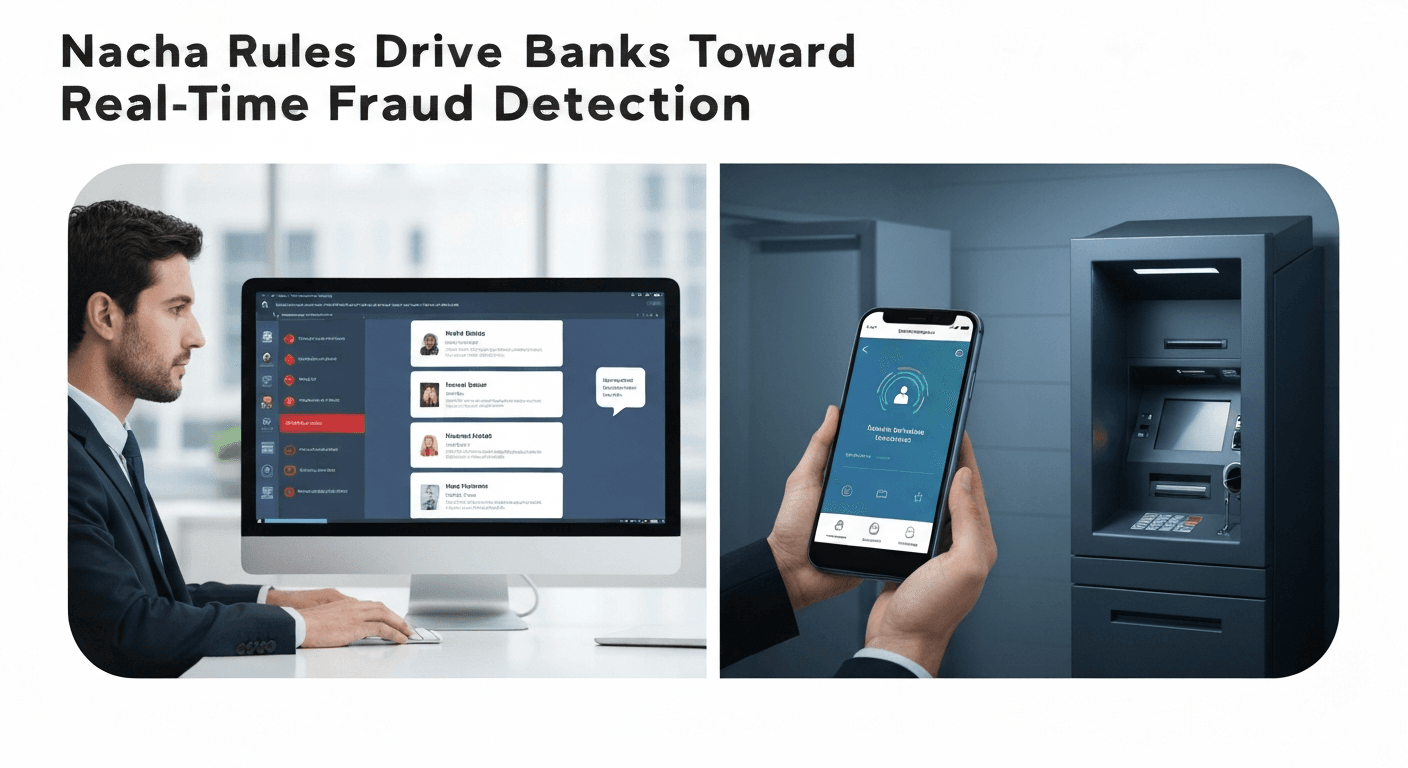
The financial landscape is undergoing a seismic shift, driven by the relentless pressure of escalating fraud and evolving regulatory demands. Traditional, static fraud detection methods are proving increasingly inadequate against sophisticated attacks that exploit the speed and complexity of modern payment systems. While the PYMNTS.com article highlights the impact of Nacha rules on banks, the implications extend far beyond ACH transactions. This represents a broader trend towards real-time risk management across the entire financial ecosystem, demanding a proactive and adaptive approach from institutions of all sizes. The transition from periodic reviews to continuous monitoring is not merely a compliance exercise; it's a fundamental restructuring of how financial institutions perceive and manage risk in the digital age. The cost of inaction is substantial, encompassing not only direct financial losses from fraud but also reputational damage, regulatory penalties, and erosion of customer trust.
What's Happening: Nacha's Push for Real-Time Fraud Prevention
The National Automated Clearing House Association (Nacha), the governing body for the ACH network, has implemented new rules designed to bolster fraud detection and prevention. These rules, phased in with recent and upcoming deadlines in March and June, are compelling banks to move beyond static, rule-based systems and embrace dynamic, real-time monitoring of ACH transactions. This shift requires a more granular and continuous assessment of risk factors associated with each transaction, taking into account elements like transaction velocity, payment patterns, and payee/payer relationships. The core objective is to identify and intercept fraudulent transactions before they can be processed, minimizing financial losses and protecting both businesses and consumers. This necessitates significant upgrades to existing infrastructure, including enhanced data flows, robust identity verification protocols, and seamless coordination across various internal departments, such as fraud prevention, compliance, and IT. Banks are essentially being pushed to adopt a "detect and respond" model that operates in near real-time, rather than relying on after-the-fact investigations. This proactive stance is critical in mitigating the growing threat of ACH fraud, which continues to evolve in sophistication and scale.
Industry Context: A Broader Trend Towards Real-Time Risk Management
The Nacha mandate is not an isolated event but rather a symptom of a larger trend within the financial industry. Regulatory bodies globally are increasingly emphasizing the need for real-time risk management and fraud prevention. The European Union's PSD2 (Revised Payment Services Directive), for instance, mandates Strong Customer Authentication (SCA) for online payments, adding an extra layer of security to combat fraud. Similarly, the U.S. Securities and Exchange Commission (SEC) is focusing on cybersecurity preparedness and incident response plans for regulated entities, reflecting a growing awareness of the systemic risks posed by cyberattacks. Furthermore, the rise of instant payment systems like FedNow and The Clearing House's RTP network is further accelerating the need for real-time fraud detection. These systems offer unparalleled speed and convenience, but they also create new opportunities for fraudsters to exploit vulnerabilities. Competitors are adopting various approaches to tackle this challenge. Some are investing heavily in artificial intelligence (AI) and machine learning (ML) to develop sophisticated fraud detection algorithms that can identify anomalies and predict fraudulent behavior. Others are focusing on improving data analytics capabilities to gain a more comprehensive view of customer activity and transaction patterns. A critical differentiator lies in the ability to integrate real-time fraud detection capabilities into the core payment processing infrastructure, ensuring seamless and efficient risk management without compromising the speed and convenience of modern payment systems. This is a significant departure from traditional fraud detection methods, which often relied on batch processing and manual review, resulting in delays and missed opportunities to prevent fraud.
Why This Matters for Professionals: Practical Impact and Action Items
The shift towards real-time fraud detection has significant implications for various financial professionals, including accountants, CFOs, and fintech practitioners. For accountants, it necessitates a deeper understanding of fraud risks associated with electronic payments and the internal controls required to mitigate these risks. This includes evaluating the effectiveness of existing fraud detection systems, identifying vulnerabilities, and recommending improvements. CFOs must prioritize investments in real-time fraud detection technologies and ensure that these investments are aligned with the organization's overall risk management strategy. This requires a cost-benefit analysis of different solutions, considering factors such as implementation costs, ongoing maintenance, and potential return on investment in terms of reduced fraud losses. Fintech practitioners play a crucial role in developing and implementing innovative fraud detection solutions. This includes leveraging AI and ML to build more sophisticated algorithms, improving data analytics capabilities, and integrating fraud detection into the core payment processing infrastructure.
Specific Action Items:
- Assess current fraud detection capabilities: Conduct a thorough review of existing fraud detection systems to identify gaps and vulnerabilities.
- Develop a real-time fraud detection strategy: Create a comprehensive plan that outlines the organization's approach to real-time fraud detection, including specific goals, objectives, and timelines.
- Invest in appropriate technologies: Evaluate and select fraud detection technologies that align with the organization's needs and budget.
- Implement robust internal controls: Establish strong internal controls to prevent and detect fraud, including segregation of duties, transaction monitoring, and regular audits.
- Provide employee training: Educate employees on fraud risks and prevention techniques.
- Stay informed about regulatory changes: Keep abreast of evolving regulations and industry best practices related to fraud prevention.
Failure to adapt to this new reality can result in significant financial losses, regulatory penalties, and reputational damage. The implementation of real-time fraud detection systems should be viewed as an investment in the long-term security and stability of the organization.
The Bottom Line: Forward-Looking Analysis
The journey towards real-time fraud detection is not a one-time project but an ongoing process of continuous improvement and adaptation. As fraudsters become more sophisticated, financial institutions must stay one step ahead by investing in cutting-edge technologies, fostering a culture of risk awareness, and collaborating with industry peers to share information and best practices. The future of fraud prevention will likely involve even greater reliance on AI and ML, as well as the adoption of more sophisticated data analytics techniques. Furthermore, the integration of biometric authentication and behavioral biometrics will play a crucial role in verifying user identities and detecting fraudulent activity. Financial institutions that embrace these trends and proactively invest in real-time fraud detection will be best positioned to protect themselves and their customers from the ever-evolving threat of fraud. The transition to real-time fraud detection is essential for maintaining trust and security in an increasingly interconnected and digital financial ecosystem.
Fintech.News Desk
Editorial TeamThe Fintech.News Desk covers the latest developments in fintech, accounting technology, tax regulation, and AI in finance. We combine AI-assisted research with editorial review to deliver analytical news coverage for finance professionals.
Enjoyed this article?
Get stories like this first on our Telegram channel. Subscribed by thousands of fintech leaders.
Join us on TelegramRead Next

42% of CFOs Express Interest in Stablecoins as Payments Use Cases Grow
Stablecoins gain traction! 42% of CFOs eye them for payments as use cases expand. Learn how this crypto trend impacts accounting & fintech strategies.

Gig Workers Want Real-Time Pay for Real-Time Work
Gig workers want instant pay! Learn how real-time payments solve cash flow issues for freelancers & contractors. Fintech & accounting insights.

Payments Modernization Emerges as Growth Engine for Small Businesses
Payments modernization fuels SMB growth! Discover how streamlined payment systems boost efficiency, improve cash flow, and drive revenue for accounting professi

Critics: Circle Failed to Block Drift Hack Transfer
Circle's response to the Drift hack faces scrutiny. Did the stablecoin issuer fail to prevent illicit fund transfers? Key DeFi security concerns explored.

Check City Notifies 322,687 People of March 2025 Data Breach
Check City breach impacts 322K+. Details on the March 2025 data breach & its implications for fintech security. Protect your clients' data now.

Shopify Expands Availability of B2B Tools to All Merchants
Shopify B2B tools now available to all merchants! Streamline digital wholesale, improve accounting, and capitalize on B2B e-commerce growth.
More in this topic

Embedded Payments Make Fraud Harder to See and Faster to Hit

HSBC Extends Tokenized Deposit Service to US Firms

Inflation Hits 58% of Small Businesses and Pushes Embedded B2B Finance Forward

Fed Finds Stablecoins Idle, Confirms PYMNTS Usage Gap

68% of Banks Increase Fraud Defense Spending as Account Takeovers Spike

BILL Expands Supplier Payments Plus Solution

Visa Wants Fraudsters to Pick Another Business

Fed Rule Changes Would Expand SMB Lending Capacity