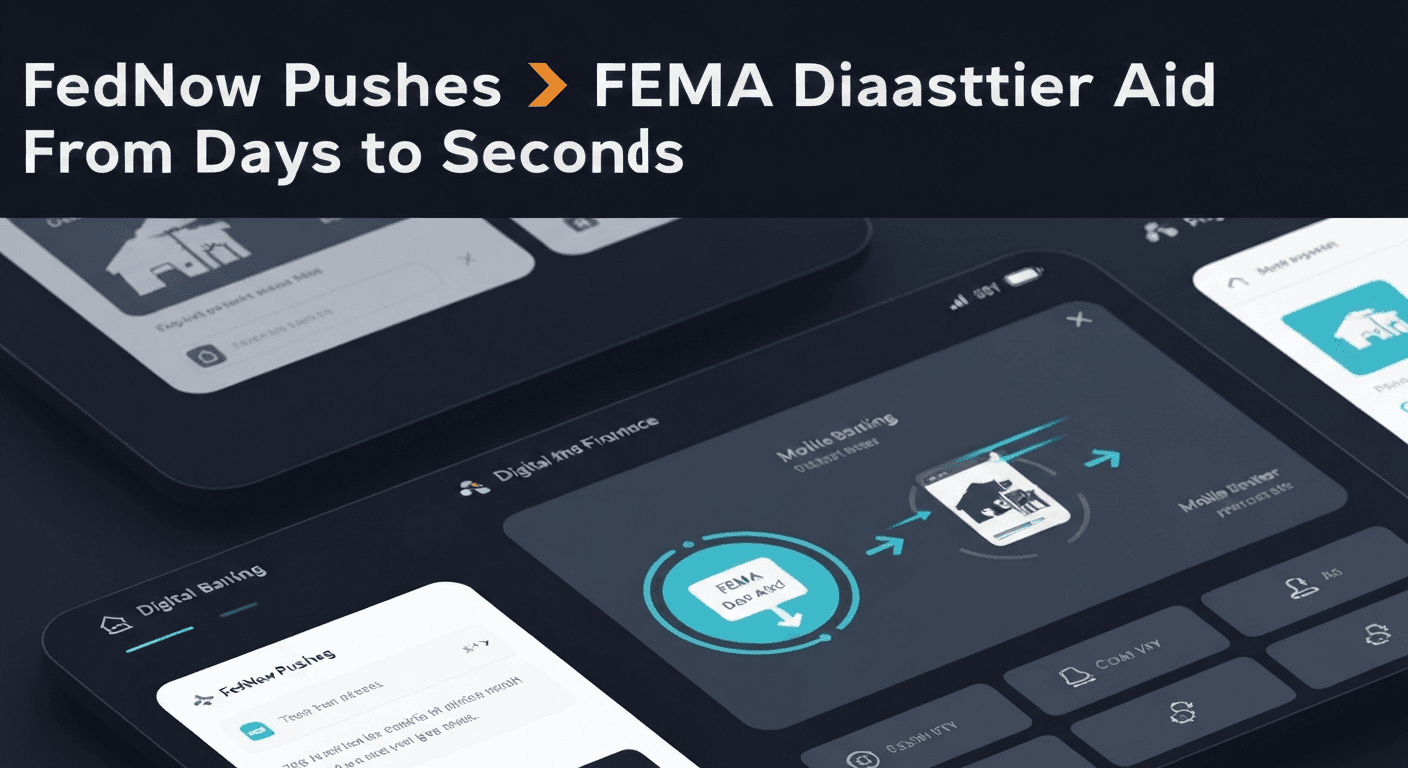
The specter of natural disasters looms large, a constant threat amplified by climate change. The aftermath – the immediate need for food, shelter, and medical assistance – often clashes violently with the bureaucratic realities of aid distribution. Traditionally, government assistance, particularly from agencies like FEMA, has been plagued by delays, requiring days, even weeks, for funds to reach those in dire need. In a world demanding instant gratification, this lag is not only frustrating but can have life-or-death consequences. The recent emergence of FedNow, the Federal Reserve's instant payment service, promises to drastically alter this landscape, potentially reducing aid delivery times from days to mere seconds. This shift has profound implications for disaster relief, reshaping the roles of fintech companies, accounting professionals, and government agencies alike. The speed and efficiency gains offered by FedNow aren't just incremental improvements; they represent a fundamental paradigm shift in how emergency assistance is delivered.
What's Happening: The FedNow Revolution in Disaster Relief
The core development is the integration of FedNow into FEMA's disaster relief disbursement process. FedNow, launched in 2023, allows for near-instantaneous transfer of funds between participating banks and credit unions, 24/7, 365 days a year. This capability directly addresses the critical time delays inherent in traditional payment methods like ACH (Automated Clearing House) transfers, which can take several business days to clear. The PYMNTS article highlights the potential for FEMA to leverage FedNow to expedite the delivery of aid to individuals and families affected by disasters. Instead of waiting days for checks to arrive by mail or for ACH transfers to process, recipients could receive funds almost immediately, allowing them to purchase essential supplies, secure temporary housing, or access medical care. This rapid disbursement hinges on the ability of FEMA to verify recipient eligibility quickly and securely, and to integrate its systems with the FedNow network. The potential benefits extend beyond individual aid. Smaller businesses impacted by disasters, often crucial to local economies, could also receive immediate financial assistance to restart operations, preventing further economic fallout.
Industry Context: Real-Time Payments and the Competitive Landscape
The move to utilize FedNow for disaster relief is part of a broader trend towards real-time payments (RTP) across various sectors. Several countries have already embraced national real-time payment systems, such as UPI in India and Pix in Brazil, demonstrating the global appetite for faster and more efficient payment solutions. In the US, while ACH remains a dominant force, FedNow is positioning itself as a key competitor, offering a compelling alternative for time-sensitive transactions. Other players in the RTP space include The Clearing House (TCH), which operates its own RTP network. While TCH's network has been established longer, FedNow benefits from the backing of the Federal Reserve, giving it significant credibility and potential reach. The competitive dynamic between FedNow and TCH is likely to drive further innovation and adoption of real-time payments across the board. The integration of cryptocurrency into disaster relief, while still nascent, represents another potential avenue for faster aid delivery. However, the volatility and regulatory uncertainty surrounding cryptocurrencies present significant challenges. Compared to these alternatives, FedNow offers a regulated and secure platform with the full faith and credit of the Federal Reserve behind it, making it a more reliable option for government agencies like FEMA. The IMF has consistently emphasized the importance of robust and regulated payment systems for financial stability, a factor that favors FedNow's approach.
Why This Matters for Professionals: Accountants, CFOs, and Fintech Practitioners
The adoption of FedNow for disaster relief has several practical implications for professionals in finance and accounting. For accountants, it necessitates a deeper understanding of real-time payment systems and their impact on financial reporting and reconciliation. Traditional accounting practices, often geared towards batch processing and end-of-day reconciliations, may need to be adapted to accommodate the near-instantaneous nature of FedNow transactions. CFOs need to evaluate the potential benefits of integrating FedNow into their own payment processes, particularly for time-critical payments to suppliers or employees. This requires assessing the costs and benefits of upgrading existing systems and establishing new security protocols. Fintech practitioners have a crucial role to play in developing the infrastructure and applications needed to support the widespread adoption of FedNow. This includes creating secure and user-friendly platforms for disaster relief recipients to access and manage their funds. Furthermore, fintech companies can leverage FedNow to offer innovative financial products and services tailored to the needs of disaster-affected communities, such as microloans or insurance payouts. A key consideration for all professionals is compliance with relevant regulations, including anti-money laundering (AML) and know-your-customer (KYC) requirements. The speed of FedNow transactions necessitates robust compliance frameworks to prevent illicit activities. Action items include:
- Education: Invest in training programs to educate staff on real-time payment systems and their implications for accounting and finance.
- System Upgrades: Evaluate existing payment systems and identify opportunities to integrate FedNow.
- Compliance: Develop robust AML and KYC procedures to ensure compliance with regulatory requirements.
- Collaboration: Partner with fintech companies to develop innovative solutions for disaster relief and other applications of FedNow.
The Bottom Line: A More Resilient Future
The integration of FedNow into FEMA's disaster relief efforts represents a significant step forward in creating a more resilient and responsive system for providing aid to those in need. By leveraging the speed and efficiency of real-time payments, FEMA can deliver critical assistance faster, helping individuals and communities recover more quickly from devastating events. The success of this initiative hinges on collaboration between government agencies, financial institutions, and fintech companies, ensuring that the benefits of FedNow are realized by those who need them most. The ability to deliver disaster aid in seconds, not days, fundamentally alters the landscape of emergency response and promises a more equitable and effective system of support.
Fintech.News Desk
Editorial TeamThe Fintech.News Desk covers the latest developments in fintech, accounting technology, tax regulation, and AI in finance. We combine AI-assisted research with editorial review to deliver analytical news coverage for finance professionals.
Enjoyed this article?
Get stories like this first on our Telegram channel. Subscribed by thousands of fintech leaders.
Join us on TelegramRead Next

Embedded Payments Make Fraud Harder to See and Faster to Hit
Embedded payments hide fraud in plain sight. Learn how seamless integration impacts fraud detection & speed in fintech. Stay ahead of risks.

Inflation Hits 58% of Small Businesses and Pushes Embedded B2B Finance Forward
Inflation hurting SMBs? See how embedded B2B finance offers a lifeline. Discover solutions & strategies for accounting/fintech pros.

Fed Finds Stablecoins Idle, Confirms PYMNTS Usage Gap
Fed report reveals stablecoins mostly idle, used within crypto, not mainstream payments. PYMNTS usage gap confirmed. Fintech/accounting insights here.

68% of Banks Increase Fraud Defense Spending as Account Takeovers Spike
Banks boost fraud defense! 68% increase spending amid account takeover surge. Stay ahead of fintech security trends & protect your institution now.

BILL Expands Supplier Payments Plus Solution
Automate enterprise AP with BILL's Supplier Payments Plus. Enhanced features streamline supplier payments for large enterprises & SMBs. Learn more.

Visa Wants Fraudsters to Pick Another Business
Visa combats evolving fraud with AI. Deep dive into their strategy against sophisticated cybercrime. Insights for fintech & accounting pros.
More in this topic

HSBC Extends Tokenized Deposit Service to US Firms

Fed Rule Changes Would Expand SMB Lending Capacity
Trulioo Pushes Back Beyond One-Time Identity Checks

42% of CFOs Express Interest in Stablecoins as Payments Use Cases Grow

Gig Workers Want Real-Time Pay for Real-Time Work