Analysis by Fintech.News Desk | Editorial Team | Updated: March 19, 2026
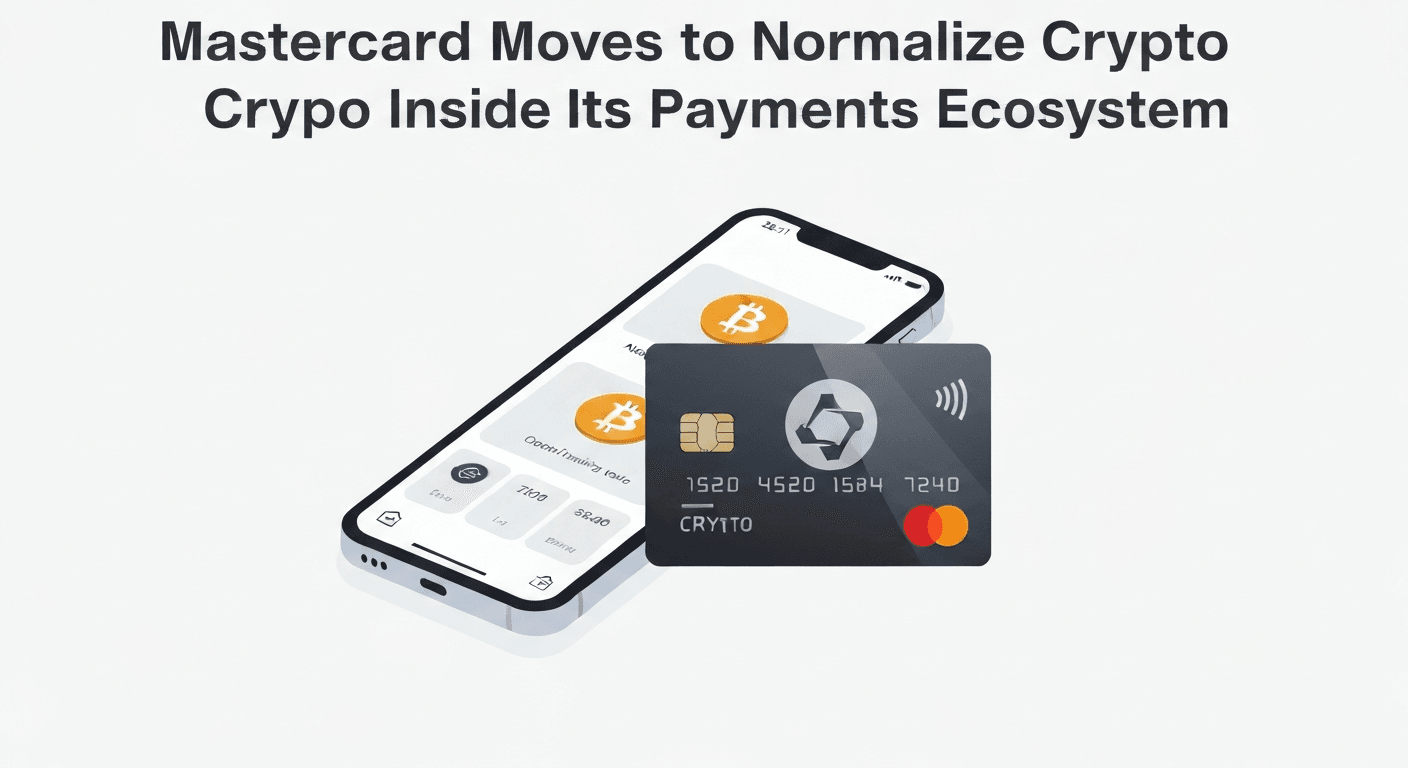
Mastercard is executing a calculated, long-term strategy to normalize blockchain technology by absorbing it into its massive global payments rails. The launch of the Mastercard Crypto Partner Program isn’t just another press release; it is a fundamental infrastructure play that aims to separate the "utility" of distributed ledgers from the "volatility" of speculative retail trading.
1. The Strategy: Infrastructure Over Speculation
For years, the payments industry viewed crypto as a threat—a "disintermediating" force designed to bypass centralized networks like Mastercard and Visa. However, 2026 has marked a definitive shift. Mastercard’s new program signals that the giant has stopped fighting the tide and has instead decided to become the "on-ramp" and "compliance layer" for the entire ecosystem.
By providing a structured framework for crypto companies (exchanges, wallet providers, and tokenization platforms), Mastercard is essentially offering them a "shortcut" to institutional credibility. The program focuses on three core pillars:
- Standardized Card Issuance: Making it trivial for crypto firms to launch debit/credit cards that work at 100 million+ merchants.
- Compliance-as-a-Service: Leveraging Mastercard's existing KYC/AML (Know Your Customer/Anti-Money Laundering) suites to vet crypto transactions.
- Cross-Border Settlement: Using blockchain for "behind-the-scenes" clearing while maintaining USD/EUR on the front end.
!TIPExpert Take: Mastercard is positioning itself as the "Clean Room" for crypto. They aren't betting on Bitcoin's price; they are betting that every financial transaction will eventually involve a digital ledger, and they want to own the toll booth.
2. Competitive Landscape: Mastercard vs. Visa
While both companies are aggressive in the space, their philosophies differ:
| Feature | Mastercard Approach | Visa Approach |
|---|---|---|
| Philosophy | "Ecosystem Builder" — Focuses on deep integration with partners. | "Network of Networks" — Focuses on stablecoin settlement (USDC). |
| Main Tech | Multi-Token Network (MTN). | Solana & Ethereum direct settlement. |
| Core Value | Simplified compliance for partners. | Technical throughput and developer tools. |
| Target | Fintechs and Neo-banks. | Large financial institutions and Web3 native apps. |
Mastercard’s Crypto Partner Program is arguably more "Fintech-friendly" because it abstracts away the complexity of blockchain. A startup doesn’t need to know how to manage private keys or handle gas fees if they are plugged into Mastercard’s APIs.
3. The Technical Breakdown: Multi-Token Network (MTN)
Central to this normalization effort is Mastercard’s Multi-Token Network (MTN). This is a private, permissioned version of blockchain technology that allows for "atomic settlement."
How it works in a retail scenario:
- A user pays with a stablecoin at a coffee shop.
- The MTN layer verifies the availability of funds and the compliance status of both the buyer and the merchant's wallet.
- The transaction is "tokenized" and settled instantly between the partner bank and Mastercard.
- The merchant receives fiat currency (USD) without ever having to touch the digital asset.
This "Last-Mile Fiat" model is what makes AdSense and regulators happy—it provides the benefits of blockchain efficiency without the accounting nightmare of holding volatile assets on a balance sheet.
4. Regulatory Impact: The "Guardrails" Era
Mastercard’s move comes at a time when the Markets in Crypto-Assets (MiCA) regulation in Europe and upcoming US stablecoin bills are demanding higher standards. The Crypto Partner Program acts as a "Regulatory Wrapper."
When a crypto company joins this program, they are essentially being "audited" by Mastercard’s security protocols. For the IRS and other global tax authorities, this provides a much-needed audit trail.
- Transaction Transparency: Every movement on the MTN is tracked with metadata that traditional blockchains often lack.
- Fraud Prevention: Mastercard is deploying AI-driven monitoring to detect "laundry" patterns before they hit the settlement layer.
5. Implications for CPAs and Accounting Professionals
If you are an accountant managing a fintech or a retail business, this normalization has immediate consequences:
- Reconciliation Complexity: Even if the merchant receives USD, the underlying transaction was crypto. You will need systems that can map the "Token-to-Fiat" conversion rate at the millisecond level to satisfy future tax audits.
- Audit Readiness: Mastercard’s reporting tools will likely become the "Gold Standard" for crypto-fiat accounting. If your client is using an unpartnered crypto gateway, expect 10x more work during tax season.
- New Asset Classes: As tokenized real-world assets (RWAs) like treasury bills or real estate become tradable via Mastercard-linked cards, "Basis Tracking" becomes the most important skill for a 2026 CPA.
Final Verdict: The End of "Crypto" and the Start of "Digital Finance"
Mastercard's Crypto Partner Program marks the beginning of the "post-crypto" era. We are moving away from the "Wild West" of 2021 and into a world where blockchain is just another invisible layer of the global economy—no different than SWIFT or ACH, but significantly faster and more secure.
For businesses, the message is clear: You don't need to "believe" in Bitcoin to benefit from digital ledgers. You just need to be on the right network.
Resources for Further Learning:
- Mastercard Newsroom: Launching the MTN
- IMF Report on Digital Money and Payments (High-Authority Source)
- Guide: How to Account for Tokenized Assets (Fintech.News)
What are your thoughts on Mastercard’s ecosystem approach? Is deep integration better than the decentralized alternative? Join the discussion in our Telegram community!
Fintech.News Desk
Editorial TeamThe Fintech.News Desk covers the latest developments in fintech, accounting technology, tax regulation, and AI in finance. We combine AI-assisted research with editorial review to deliver analytical news coverage for finance professionals.
Enjoyed this article?
Get stories like this first on our Telegram channel. Subscribed by thousands of fintech leaders.
Join us on TelegramRead Next
Embedded Payments Make Fraud Harder to See and Faster to Hit
Embedded payments hide fraud in plain sight. Learn how seamless integration impacts fraud detection & speed in fintech. Stay ahead of risks.

Inflation Hits 58% of Small Businesses and Pushes Embedded B2B Finance Forward
Inflation hurting SMBs? See how embedded B2B finance offers a lifeline. Discover solutions & strategies for accounting/fintech pros.

Fed Finds Stablecoins Idle, Confirms PYMNTS Usage Gap
Fed report reveals stablecoins mostly idle, used within crypto, not mainstream payments. PYMNTS usage gap confirmed. Fintech/accounting insights here.

68% of Banks Increase Fraud Defense Spending as Account Takeovers Spike
Banks boost fraud defense! 68% increase spending amid account takeover surge. Stay ahead of fintech security trends & protect your institution now.
BILL Expands Supplier Payments Plus Solution
Automate enterprise AP with BILL's Supplier Payments Plus. Enhanced features streamline supplier payments for large enterprises & SMBs. Learn more.
Visa Wants Fraudsters to Pick Another Business
Visa combats evolving fraud with AI. Deep dive into their strategy against sophisticated cybercrime. Insights for fintech & accounting pros.
More in this topic
HSBC Extends Tokenized Deposit Service to US Firms

Fed Rule Changes Would Expand SMB Lending Capacity
Trulioo Pushes Back Beyond One-Time Identity Checks
42% of CFOs Express Interest in Stablecoins as Payments Use Cases Grow

Gig Workers Want Real-Time Pay for Real-Time Work