The global financial landscape is undergoing a rapid transformation, driven by technological advancements and evolving consumer expectations. Central to this shift is the rise of digital assets, including stablecoins, which aim to bridge the gap between traditional finance and the burgeoning world of cryptocurrencies. While Bitcoin and other cryptocurrencies offer decentralization and potential for high returns, their volatility presents significant challenges for everyday transactions and broader adoption. Stablecoins, pegged to a stable asset like the US dollar, offer a more predictable value proposition, making them attractive for payments, remittances, and other financial applications. PayPal's recent expansion of its PYUSD stablecoin to 70 markets represents a significant step towards mainstream adoption of stablecoins and signals a maturing of the digital asset ecosystem. This move has potentially far-reaching implications for businesses, consumers, and financial professionals alike, particularly those in accounting and fintech. The timing is crucial as regulators worldwide are grappling with how to oversee digital assets, and PayPal's initiative could shape future regulatory frameworks.
What's Happening: PYUSD Goes Global
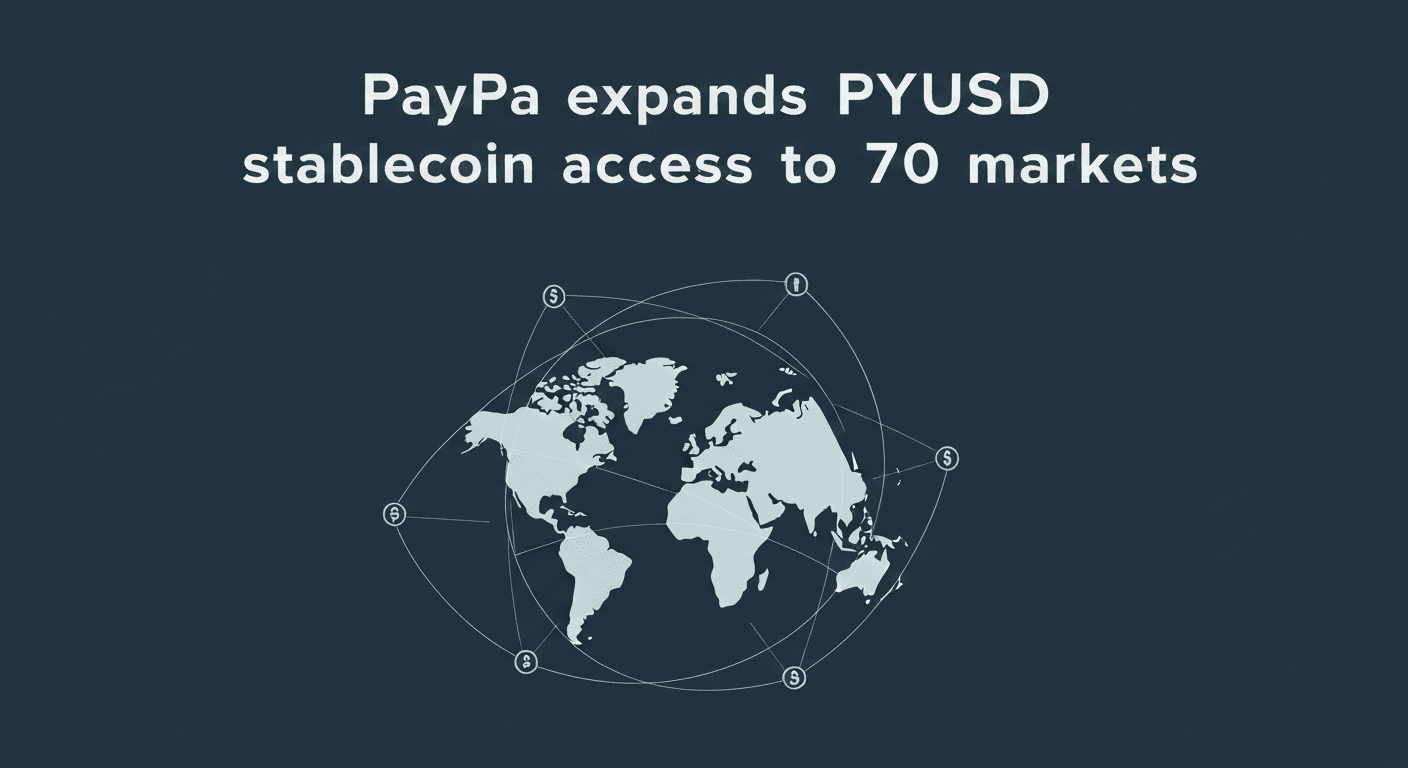
PayPal's decision to broaden the availability of PYUSD to 70 countries marks a substantial increase in its global reach. Initially launched in the United States, PYUSD is an ERC-20 token on the Ethereum blockchain, meaning it benefits from the network's security and transparency. This expansion allows users in the newly added markets to buy, sell, hold, and transfer PYUSD within the PayPal ecosystem. Furthermore, users can leverage PYUSD to fund purchases with millions of merchants globally who accept PayPal. The company is also highlighting opportunities to earn rewards, incentivizing adoption and usage. This expansion is not simply about increasing user numbers; it's about establishing PYUSD as a viable alternative to traditional payment methods, especially in regions where access to banking services is limited or inefficient. PayPal's established infrastructure, including its user base and compliance framework, provides a significant advantage in achieving this goal. While specific details on the 70 countries were not detailed in the original source, it is likely that PayPal has conducted thorough risk assessments and obtained necessary regulatory approvals in each jurisdiction to ensure compliance. This underscores the importance of a robust regulatory strategy for any company operating in the digital asset space.
Industry Context: Stablecoins in a Competitive Market
PayPal's PYUSD enters a competitive market already populated by established stablecoins like Tether (USDT) and Circle's USDC. USDT remains the dominant player in terms of market capitalization and trading volume, followed by USDC. These stablecoins have become integral to the cryptocurrency trading ecosystem, serving as a common trading pair against other digital assets. However, PYUSD differentiates itself through its association with a trusted and regulated financial institution like PayPal. This branding could appeal to users who are hesitant to engage with less established or unregulated stablecoins. The backing of PayPal also lends credibility and may provide a stronger sense of security for users. Furthermore, PayPal's existing user base of hundreds of millions worldwide provides a significant built-in audience for PYUSD. While USDT and USDC are primarily used within the cryptocurrency trading ecosystem, PYUSD is positioned to facilitate everyday transactions within the PayPal network. This could potentially unlock new use cases for stablecoins beyond trading, such as cross-border payments, remittances, and e-commerce. The competitive landscape also includes central bank digital currencies (CBDCs), which are government-backed digital currencies. While CBDCs are still in their early stages of development, they represent a potential long-term competitor to stablecoins. However, the timeline for widespread CBDC adoption remains uncertain, giving stablecoins like PYUSD an opportunity to establish themselves in the market.
Why This Matters for Professionals: Implications for Accounting and Fintech
The expansion of PYUSD has significant implications for accounting and fintech professionals. Accountants need to understand the accounting treatment of stablecoins, which is still evolving. Currently, stablecoins are often treated as cash equivalents, but this may change as regulatory guidance becomes clearer. The Financial Accounting Standards Board (FASB) is actively considering the accounting treatment of digital assets, including stablecoins, and new standards could significantly impact how companies report their holdings. Furthermore, accountants need to be aware of the tax implications of using stablecoins, including potential capital gains taxes on appreciation and income taxes on rewards earned. The IRS has issued guidance on the tax treatment of virtual currencies, but this guidance is still evolving and may not fully address the complexities of stablecoins. Fintech professionals need to consider how stablecoins can be integrated into existing payment systems and financial applications. PYUSD's integration into the PayPal network provides a ready-made infrastructure for facilitating stablecoin-based transactions. This could lead to the development of new financial products and services that leverage the benefits of stablecoins, such as faster and cheaper cross-border payments. Fintech companies also need to ensure compliance with relevant regulations, including anti-money laundering (AML) and know-your-customer (KYC) requirements. PayPal's established compliance framework provides a model for other companies operating in the stablecoin space.
Action Items for Professionals:
- Stay informed: Continuously monitor regulatory developments and accounting standards related to digital assets and stablecoins.
- Develop expertise: Invest in training and education to understand the technical and financial aspects of stablecoins.
- Assess the impact: Evaluate how the use of stablecoins could affect your organization's financial reporting, tax compliance, and operational processes.
- Explore opportunities: Identify potential use cases for stablecoins within your organization, such as streamlining payments, reducing transaction costs, or accessing new markets.
- Ensure compliance: Implement robust AML/KYC procedures to mitigate the risks associated with digital asset transactions.
The Bottom Line: A Step Towards Mainstream Adoption
PayPal's expansion of PYUSD to 70 markets is a significant milestone in the evolution of stablecoins. It leverages PayPal's existing infrastructure and brand recognition to introduce stablecoins to a broader audience. While challenges remain, including regulatory uncertainty and competition from established players, this move signals a growing acceptance of digital assets within the mainstream financial system. The success of PYUSD will depend on its ability to provide a reliable, secure, and convenient payment solution for both consumers and businesses, but the potential is there to significantly alter the global payments landscape. This expansion represents a crucial step towards integrating stablecoins into everyday financial transactions, potentially reshaping the future of money.
Fintech.News Desk
Editorial TeamThe Fintech.News Desk covers the latest developments in fintech, accounting technology, tax regulation, and AI in finance. We combine AI-assisted research with editorial review to deliver analytical news coverage for finance professionals.
Enjoyed this article?
Get stories like this first on our Telegram channel. Subscribed by thousands of fintech leaders.
Join us on TelegramRead Next

Embedded Payments Make Fraud Harder to See and Faster to Hit
Embedded payments hide fraud in plain sight. Learn how seamless integration impacts fraud detection & speed in fintech. Stay ahead of risks.

HSBC Extends Tokenized Deposit Service to US Firms
HSBC brings tokenized deposits to the US! Explore how this innovative service can streamline corporate treasury & revolutionize payments for US firms.

Inflation Hits 58% of Small Businesses and Pushes Embedded B2B Finance Forward
Inflation hurting SMBs? See how embedded B2B finance offers a lifeline. Discover solutions & strategies for accounting/fintech pros.

Fed Finds Stablecoins Idle, Confirms PYMNTS Usage Gap
Fed report reveals stablecoins mostly idle, used within crypto, not mainstream payments. PYMNTS usage gap confirmed. Fintech/accounting insights here.

68% of Banks Increase Fraud Defense Spending as Account Takeovers Spike
Banks boost fraud defense! 68% increase spending amid account takeover surge. Stay ahead of fintech security trends & protect your institution now.

BILL Expands Supplier Payments Plus Solution
Automate enterprise AP with BILL's Supplier Payments Plus. Enhanced features streamline supplier payments for large enterprises & SMBs. Learn more.
More in this topic

Visa Wants Fraudsters to Pick Another Business

Fed Rule Changes Would Expand SMB Lending Capacity
Trulioo Pushes Back Beyond One-Time Identity Checks

42% of CFOs Express Interest in Stablecoins as Payments Use Cases Grow

Gig Workers Want Real-Time Pay for Real-Time Work