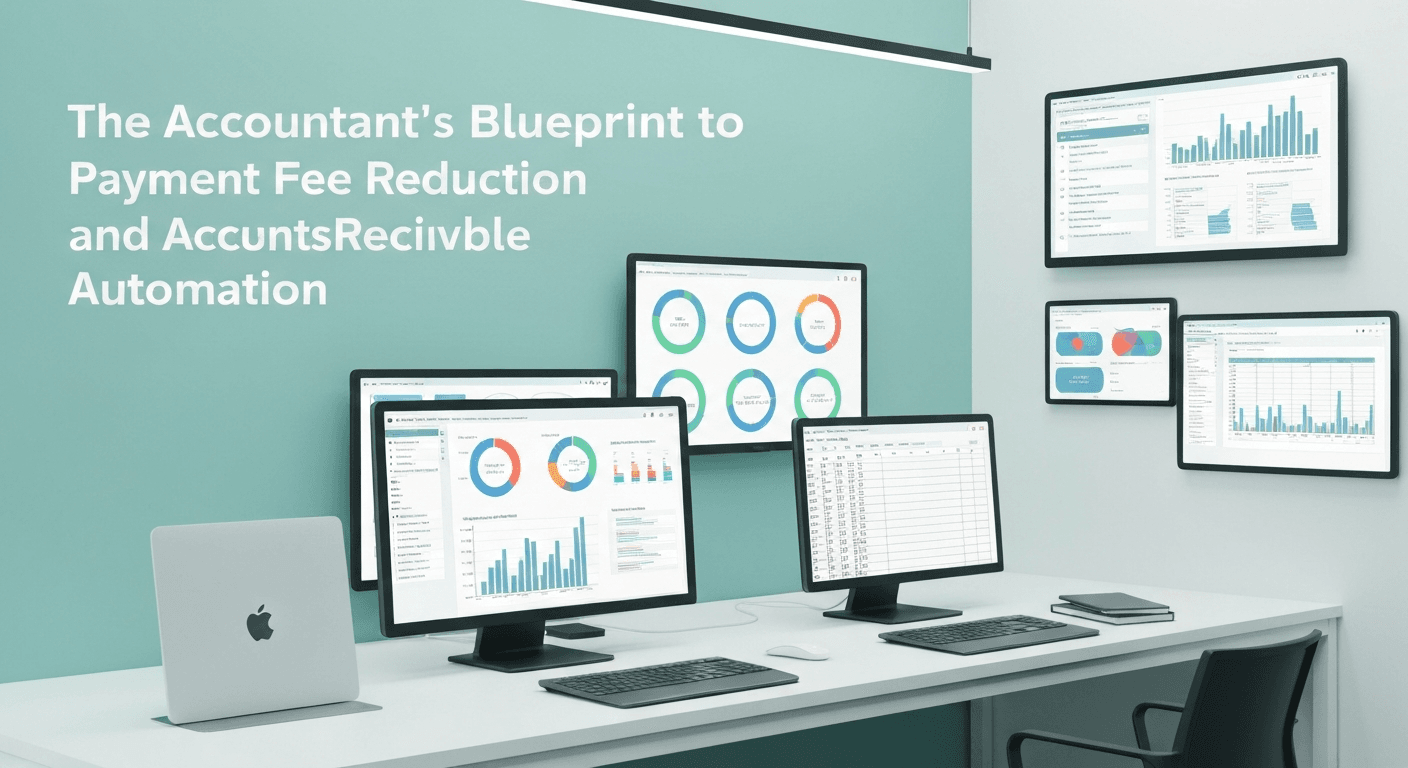
The modern accounting firm operates in an environment defined by razor-thin margins and increasing client expectations. Efficiency isn't just a desirable trait; it's a prerequisite for survival. While traditional accounting practices focused on meticulous record-keeping and compliance, the contemporary landscape demands proactive financial management, strategic advisory, and, crucially, optimized back-office operations. Accounts Receivable (AR) management, often relegated to a secondary concern, is now emerging as a critical area for improvement. The costs associated with payment processing, coupled with the inefficiencies of manual AR processes, can significantly erode profitability and hinder growth. This is why the integration of fintech solutions designed for payment fee reduction and AR automation is no longer a luxury, but a necessity for forward-thinking accounting firms seeking a competitive edge. The ability to collect payments efficiently, reduce outstanding invoices, and minimize associated fees directly translates to increased cash flow, improved client relationships, and a more streamlined operational framework.
What's Happening: Payment Fee Reduction and AR Automation
The core issue addressed is the substantial financial burden placed on accounting firms by payment processing fees and inefficient AR workflows. Traditional payment methods, such as credit cards and checks, often carry significant transaction fees, impacting the firm's bottom line. Furthermore, manual AR processes, involving paper invoices, manual reconciliation, and time-consuming follow-ups, are prone to errors, delays, and increased administrative overhead. Fintech solutions are emerging to tackle these challenges head-on. These solutions typically offer a suite of features designed to automate invoice generation and delivery, streamline payment processing through various channels (ACH, e-checks, virtual cards), and automate payment reminders and follow-ups. By leveraging these technologies, accounting firms can significantly reduce their reliance on costly payment methods and automate repetitive AR tasks, freeing up valuable resources for higher-value activities such as client advisory and strategic planning. These platforms often integrate with existing accounting software, such as QuickBooks or Xero, creating a seamless workflow and minimizing disruption to existing processes. The key is to identify and implement solutions that align with the specific needs and operational structure of the firm.
Industry Context: The Rise of Fintech in Accounting
The move towards payment fee reduction and AR automation is part of a broader trend of fintech adoption in the accounting industry. Driven by advancements in cloud computing, artificial intelligence, and machine learning, fintech companies are developing innovative solutions that are transforming traditional accounting practices. This trend is not isolated to small and medium-sized firms; even large accounting firms are increasingly embracing fintech to enhance their service offerings and improve operational efficiency. Compared to legacy AR systems, these new fintech solutions offer several advantages, including greater automation, real-time visibility into cash flow, and improved client communication. Competitors like Bill.com and Tipalti offer comprehensive AR automation platforms, while others such as Stripe and Square focus primarily on payment processing. The key differentiator often lies in the level of integration with existing accounting software and the specific features offered. For example, some platforms offer advanced analytics dashboards that provide insights into payment trends and AR performance, while others focus on streamlining international payments. The increasing adoption of these technologies is also driven by regulatory changes, such as the shift towards electronic invoicing and the increasing emphasis on data security and privacy. Compliance with regulations like GDPR and CCPA requires robust data management practices, which fintech solutions can help facilitate.
Why This Matters for Professionals: Practical Impact and Action Items
The implications of payment fee reduction and AR automation are profound for accounting professionals. By reducing payment processing fees, firms can directly improve their profitability and increase their cash flow. Automating AR processes frees up valuable time for accounting staff, allowing them to focus on more strategic and value-added activities, such as client advisory and business development. This can lead to increased client satisfaction, improved employee morale, and ultimately, a more competitive and profitable firm.
Here are some specific action items for accounting professionals:
- Assess Current AR Processes: Conduct a thorough review of existing AR processes to identify bottlenecks, inefficiencies, and areas for improvement. This includes analyzing payment methods, invoicing procedures, and collection strategies.
- Evaluate Fintech Solutions: Research and evaluate various fintech solutions that offer payment fee reduction and AR automation capabilities. Consider factors such as integration with existing accounting software, pricing, features, and customer support.
- Calculate ROI: Estimate the potential return on investment (ROI) of implementing a fintech solution. This includes calculating the savings in payment processing fees, the reduction in administrative costs, and the potential increase in revenue due to improved cash flow.
- Implement a Pilot Program: Start with a pilot program to test the chosen fintech solution with a small group of clients or a specific department. This allows you to identify any potential issues and fine-tune the implementation process before rolling it out to the entire firm.
- Train Staff: Provide adequate training to accounting staff on how to use the new fintech solution effectively. This ensures that they can leverage its full capabilities and maximize its benefits.
- Monitor Performance: Continuously monitor the performance of the fintech solution and make adjustments as needed. This includes tracking key metrics such as payment processing fees, days sales outstanding (DSO), and client satisfaction.
Adopting these new technologies also necessitates a shift in mindset. Accountants need to embrace the role of technology adopters and strategic advisors, leveraging data analytics to provide clients with insights and guidance. This requires continuous learning and professional development to stay abreast of the latest fintech trends and best practices. Failure to adapt to these changes could result in a loss of competitiveness and a decline in profitability.
The Bottom Line: Forward-Looking Analysis
The future of accounting is inextricably linked to fintech. Accounting firms that embrace payment fee reduction and AR automation will be better positioned to thrive in an increasingly competitive and technologically driven environment. The shift from manual, paper-based processes to automated, cloud-based solutions is not just about efficiency; it's about survival. The firms that can successfully leverage fintech to streamline their operations, improve their client service, and reduce their costs will be the winners in the long run. The increasing sophistication of these technologies, coupled with the growing demand for real-time financial data and insights, will further accelerate the adoption of fintech in the accounting industry. The key is to choose the right solutions, implement them effectively, and train staff to leverage their full potential. This will require a strategic approach, a willingness to embrace change, and a commitment to continuous improvement. Embracing fintech solutions for payment fee reduction and AR automation is no longer optional for accounting firms aiming to remain competitive and profitable in the evolving landscape.
Fintech.News Desk
Editorial TeamThe Fintech.News Desk covers the latest developments in fintech, accounting technology, tax regulation, and AI in finance. We combine AI-assisted research with editorial review to deliver analytical news coverage for finance professionals.
Enjoyed this article?
Get stories like this first on our Telegram channel. Subscribed by thousands of fintech leaders.
Join us on TelegramRead Next

Embedded Payments Make Fraud Harder to See and Faster to Hit
Embedded payments hide fraud in plain sight. Learn how seamless integration impacts fraud detection & speed in fintech. Stay ahead of risks.

HSBC Extends Tokenized Deposit Service to US Firms
HSBC brings tokenized deposits to the US! Explore how this innovative service can streamline corporate treasury & revolutionize payments for US firms.

Inflation Hits 58% of Small Businesses and Pushes Embedded B2B Finance Forward
Inflation hurting SMBs? See how embedded B2B finance offers a lifeline. Discover solutions & strategies for accounting/fintech pros.

Fed Finds Stablecoins Idle, Confirms PYMNTS Usage Gap
Fed report reveals stablecoins mostly idle, used within crypto, not mainstream payments. PYMNTS usage gap confirmed. Fintech/accounting insights here.

68% of Banks Increase Fraud Defense Spending as Account Takeovers Spike
Banks boost fraud defense! 68% increase spending amid account takeover surge. Stay ahead of fintech security trends & protect your institution now.

BILL Expands Supplier Payments Plus Solution
Automate enterprise AP with BILL's Supplier Payments Plus. Enhanced features streamline supplier payments for large enterprises & SMBs. Learn more.
More in this topic

Visa Wants Fraudsters to Pick Another Business

Fed Rule Changes Would Expand SMB Lending Capacity

Trulioo Pushes Back Beyond One-Time Identity Checks

42% of CFOs Express Interest in Stablecoins as Payments Use Cases Grow

Gig Workers Want Real-Time Pay for Real-Time Work