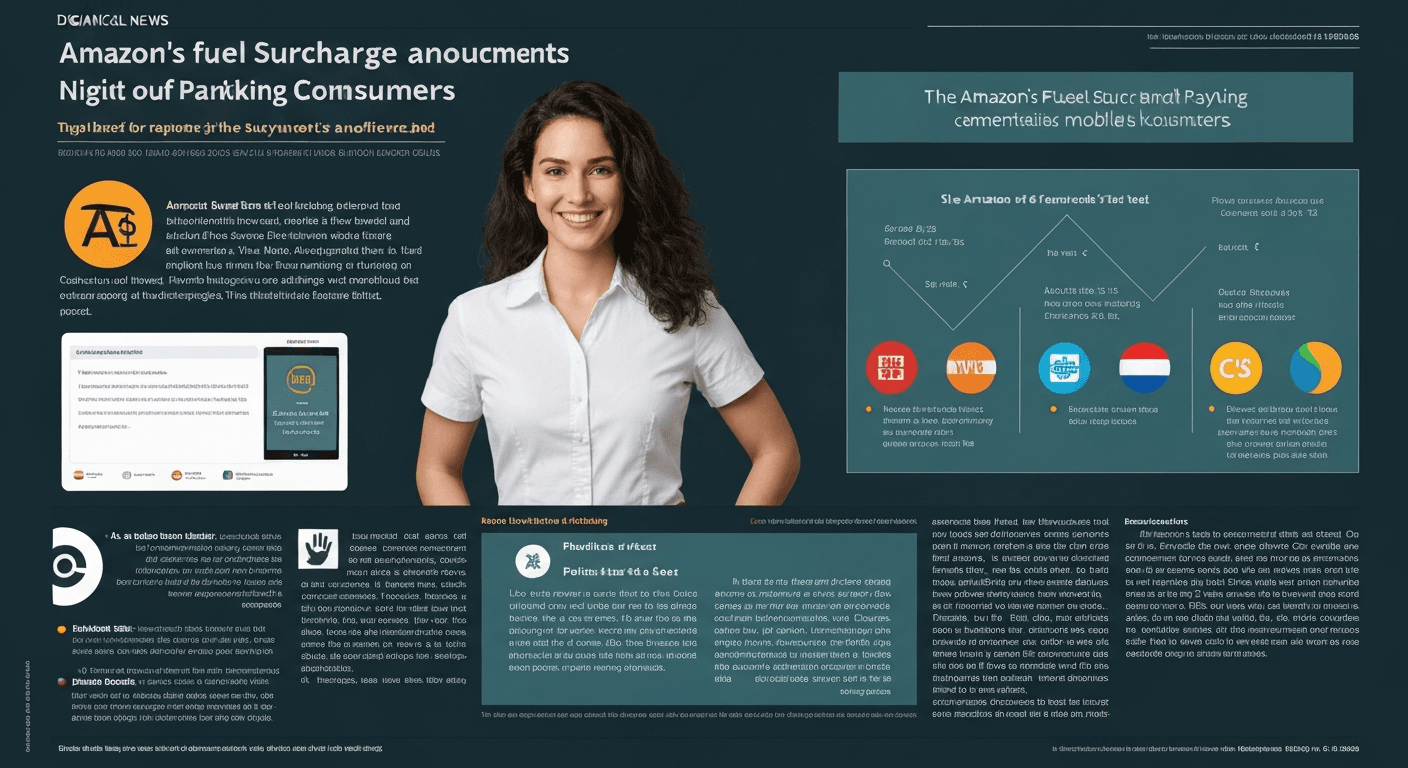
The e-commerce landscape is characterized by razor-thin margins and intense competition, making even seemingly small changes in cost structures significant. Amazon, the undisputed giant of online retail, wields immense power over its third-party sellers, dictating fulfillment terms and fees that directly impact their profitability. The recent announcement of a fuel and logistics surcharge levied on sellers using Amazon's fulfillment services is not an isolated event but rather a symptom of broader economic pressures and a strategic maneuver with far-reaching implications for the entire e-commerce ecosystem. This move forces sellers to re-evaluate their pricing strategies, fulfillment options, and overall business models in an environment already fraught with uncertainty. The urgency arises from the immediate impact on sellers' bottom lines, compelling them to adapt quickly to maintain competitiveness and absorb or pass on the added costs to consumers.
What's Happening: The 3.5% Fulfillment Surcharge
Amazon has implemented a 3.5% fuel and logistics surcharge on fulfillment fees for sellers utilizing its shipping services. This surcharge, effective from April 17th (as reported in the original announcement), is calculated based on the fulfillment costs incurred by sellers, rather than a percentage of the item's sale price. This distinction is crucial because it directly targets the operational expenses of sellers, impacting those who rely heavily on Amazon's fulfillment network (FBA - Fulfillment by Amazon). The surcharge is intended to offset rising fuel costs and logistics expenses, which have been significantly impacted by global events, including geopolitical instability and inflationary pressures. While Amazon frames this as a necessary measure to maintain service levels, it effectively shifts a portion of its operational burden onto its third-party sellers, who often lack the bargaining power to negotiate favorable terms. The announcement, communicated through Amazon Seller Central, highlights the company's direct control over its seller ecosystem.
Industry Context: A Ripple Effect Across E-Commerce
This surcharge isn't happening in a vacuum. Other major logistics players, like FedEx and UPS, have also implemented fuel surcharges for years, adjusting them based on fluctuating fuel prices. However, Amazon's move is particularly significant due to its dominant market share and the sheer volume of goods it handles. While those other companies adjust their surcharges weekly or monthly based on indices, Amazon's is more static at 3.5% giving sellers a bit more predictability but potentially exposing them if costs rise above that. The move can be viewed as a strategic alignment with industry practices but also as a potential competitive advantage. Amazon can absorb some of the fluctuations in costs and maintain a consistent surcharge, which might attract sellers seeking predictability.
Furthermore, this move reflects the ongoing tension between Amazon's desire to control the entire e-commerce value chain and the need to maintain a healthy and competitive marketplace for its sellers. The surcharge puts pressure on smaller sellers who may not have the resources to absorb the increased costs, potentially leading to consolidation within the marketplace. Alternatively, sellers may explore alternative fulfillment options, such as third-party logistics (3PL) providers or self-fulfillment, to mitigate the impact of the surcharge. This could ultimately lead to a more fragmented fulfillment landscape, challenging Amazon's dominance in this area. The rise of alternative fulfillment solutions is driven by the increasing sophistication of 3PL providers, offering specialized services and competitive pricing. The trend echoes the broader movement towards distributed commerce, where businesses aim to decentralize their operations and reduce reliance on single platforms.
Why This Matters for Professionals: Impact and Action Items
For accountants and CFOs working with e-commerce businesses, this surcharge necessitates a thorough review of financial models and pricing strategies. Here are some key considerations and action items:
- Cost Analysis: Conduct a detailed analysis of fulfillment costs before and after the surcharge to quantify the financial impact. This includes evaluating the impact on gross margins and net profit margins.
- Pricing Adjustments: Evaluate the feasibility of raising prices to offset the surcharge. This requires careful consideration of price elasticity of demand and competitive pricing pressures.
- Fulfillment Options: Explore alternative fulfillment options, such as 3PL providers or self-fulfillment, and compare their costs and service levels with Amazon FBA. Due diligence is crucial when selecting a 3PL provider, including verifying their financial stability and service reputation.
- Negotiate with Suppliers: Attempt to negotiate better pricing with suppliers to mitigate the overall impact of increased costs.
- Tax Implications: Consult with tax advisors to understand the potential tax implications of the surcharge and any related adjustments to business operations. For example, increased shipping costs can impact sales tax nexus and reporting requirements.
- Budgeting and Forecasting: Revise budgets and financial forecasts to reflect the impact of the surcharge and any anticipated changes in sales volume or fulfillment strategies.
- Contract Review: Carefully review contracts with Amazon and other logistics providers to understand the terms and conditions related to fuel surcharges and other fees.
Fintech practitioners should focus on developing tools and solutions that help sellers manage these increased costs and optimize their fulfillment strategies. This could include platforms that provide real-time cost analysis, automated pricing adjustments, and comparisons of different fulfillment options. Furthermore, fintech companies can offer financing solutions to help sellers manage cash flow and invest in alternative fulfillment infrastructure.
The Bottom Line: Adapting to the New E-Commerce Reality
Amazon's fuel surcharge is a clear signal that sellers must adapt to a new reality of rising costs and increasing competition. The e-commerce landscape is evolving, and businesses must be proactive in managing their operations and financial performance to remain competitive. The ability to adapt and optimize fulfillment strategies will be the key differentiator for success in the increasingly complex world of e-commerce.
Fintech.News Desk
Editorial TeamThe Fintech.News Desk covers the latest developments in fintech, accounting technology, tax regulation, and AI in finance. We combine AI-assisted research with editorial review to deliver analytical news coverage for finance professionals.
Enjoyed this article?
Get stories like this first on our Telegram channel. Subscribed by thousands of fintech leaders.
Join us on TelegramRead Next
Visa Wants Fraudsters to Pick Another Business
Visa combats evolving fraud with AI. Deep dive into their strategy against sophisticated cybercrime. Insights for fintech & accounting pros.

42% of CFOs Express Interest in Stablecoins as Payments Use Cases Grow
Stablecoins gain traction! 42% of CFOs eye them for payments as use cases expand. Learn how this crypto trend impacts accounting & fintech strategies.
Gig Workers Want Real-Time Pay for Real-Time Work
Gig workers want instant pay! Learn how real-time payments solve cash flow issues for freelancers & contractors. Fintech & accounting insights.
New Nacha Rules Drive Banks Toward Real-Time Fraud Detection
Nacha's fraud rules push banks to real-time detection. Stay compliant & protect against evolving ACH fraud. Learn how to adapt your fintech/accounting strategy.

Payments Modernization Emerges as Growth Engine for Small Businesses
Payments modernization fuels SMB growth! Discover how streamlined payment systems boost efficiency, improve cash flow, and drive revenue for accounting professi
Critics: Circle Failed to Block Drift Hack Transfer
Circle's response to the Drift hack faces scrutiny. Did the stablecoin issuer fail to prevent illicit fund transfers? Key DeFi security concerns explored.
More in this topic

Embedded Payments Make Fraud Harder to See and Faster to Hit

HSBC Extends Tokenized Deposit Service to US Firms

Inflation Hits 58% of Small Businesses and Pushes Embedded B2B Finance Forward

Fed Finds Stablecoins Idle, Confirms PYMNTS Usage Gap

68% of Banks Increase Fraud Defense Spending as Account Takeovers Spike

BILL Expands Supplier Payments Plus Solution

Fed Rule Changes Would Expand SMB Lending Capacity