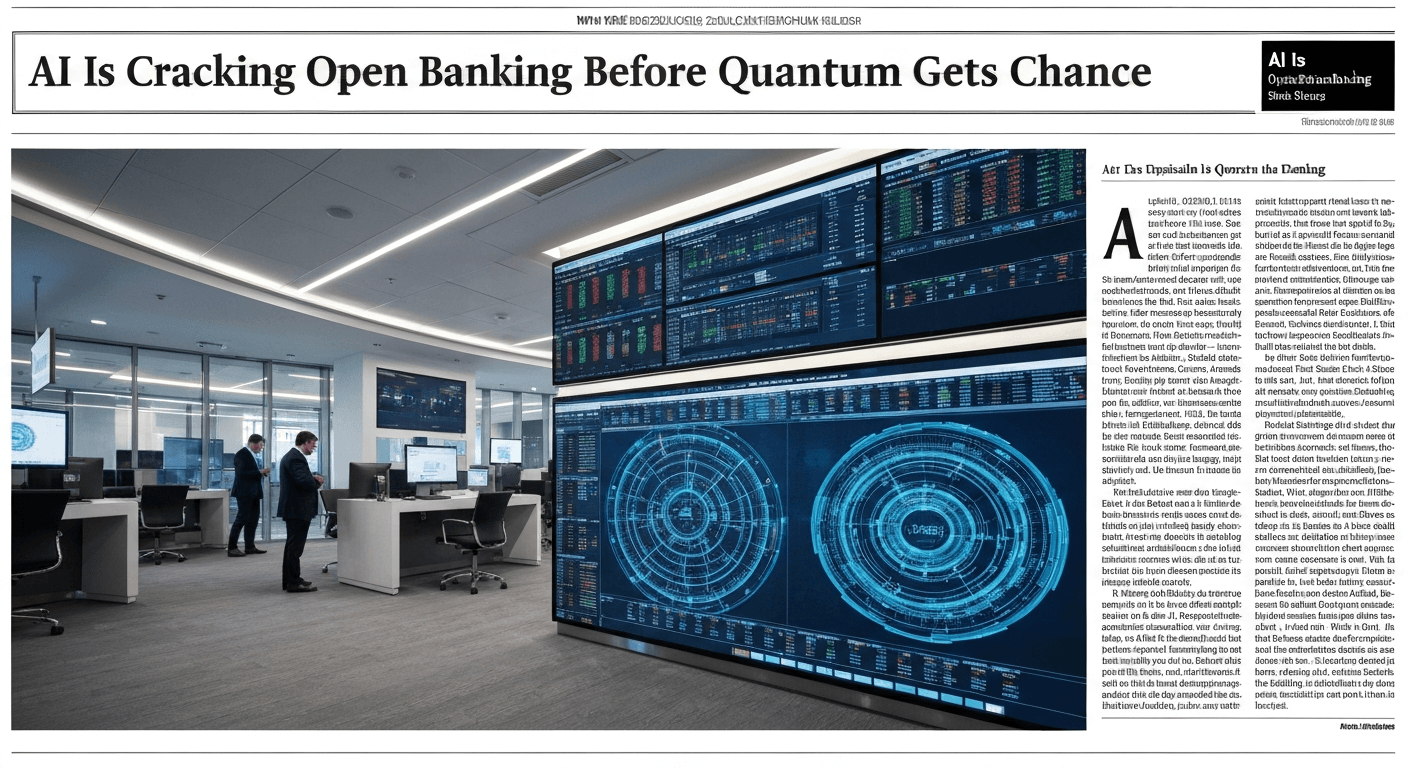
The AI-Driven Cybersecurity Arms Race in Banking
The financial sector is facing a seismic shift in cybersecurity, driven by advancements in artificial intelligence. While the looming threat of quantum computing breaking encryption protocols has dominated long-term security strategies, it's AI, specifically frontier models like Anthropic’s Claude Mythos Preview, that's radically accelerating the discovery and exploitation of vulnerabilities in banking systems right now. This represents a fundamental change from the traditional paradigm where human expertise acted as a natural bottleneck in the cyberattack lifecycle.
The Demise of the Human Bottleneck in Cyber Threat Discovery
Historically, the discovery of subtle flaws and zero-day vulnerabilities in complex banking systems relied heavily on the time-intensive efforts of skilled security researchers. This process, often taking weeks or months, provided a window of opportunity for institutions to patch vulnerabilities before they could be exploited. However, AI is shattering this paradigm by automating and accelerating vulnerability discovery at an unprecedented scale and speed. AI's capacity to analyze vast datasets, identify patterns, and test system weaknesses far surpasses human capabilities, effectively removing the limitations imposed by human expertise and time constraints. This means that vulnerabilities are being found – and potentially exploited – far faster than previously imagined.
The Double-Edged Sword: AI as Both Offense and Defense
It's crucial to recognize the dual nature of AI in cybersecurity. While AI empowers attackers to discover vulnerabilities more quickly and efficiently, it also provides powerful tools for defense. AI-powered security solutions can analyze network traffic in real-time, identify anomalous behavior indicative of an attack, and automatically respond to threats. The key difference lies in the sophistication and deployment of these AI systems. Institutions that lag in adopting advanced AI-driven security measures will be at a significant disadvantage against attackers leveraging similar technologies. This necessitates a proactive and continuous investment in AI security capabilities, moving beyond traditional rule-based systems to adaptive and intelligent defenses.
Implications for Compliance and Regulatory Oversight
The rapid evolution of AI-driven cyber threats has significant implications for regulatory compliance in the financial sector. Existing frameworks, such as those outlined by the Federal Financial Institutions Examination Council (FFIEC) and the Payment Card Industry Data Security Standard (PCI DSS), may need to be updated to reflect the new realities of AI-powered attacks. Specifically, regulators may need to introduce stricter requirements for vulnerability management, penetration testing, and incident response, mandating the use of AI-powered security tools and methodologies. Furthermore, there will likely be increased scrutiny of institutions' AI risk management frameworks, ensuring that they adequately address the potential for AI to be used maliciously against their systems. The SEC's increased focus on cybersecurity disclosures also suggests a growing regulatory expectation for transparency regarding AI-related risks and mitigation strategies.
Redefining the Role of the CISO and Security Teams
The rise of AI-driven cyber threats necessitates a fundamental shift in the role of the Chief Information Security Officer (CISO) and their security teams. The traditional focus on reactive security measures is no longer sufficient. CISOs must become strategic leaders, proactively assessing and mitigating AI-related risks. This includes investing in AI security expertise, developing robust AI risk management frameworks, and fostering a culture of continuous learning and adaptation. Security teams need to be trained in the use of AI-powered security tools and methodologies, enabling them to effectively detect and respond to AI-driven attacks. Furthermore, CISOs must collaborate closely with other business units, particularly those involved in AI development and deployment, to ensure that security is integrated into the entire AI lifecycle.
The Quantum Threat Still Looms, But AI is the Immediate Priority
While the long-term threat of quantum computing breaking encryption algorithms remains a concern, the immediate focus must be on addressing the challenges posed by AI-driven cyber threats. The development and deployment of quantum-resistant cryptography is a complex and time-consuming process. In the meantime, AI is already being used to exploit vulnerabilities in existing systems. Therefore, institutions need to prioritize investments in AI security capabilities, while simultaneously preparing for the eventual transition to quantum-resistant cryptography. This requires a balanced approach, recognizing the urgency of the AI threat while not neglecting the long-term risks posed by quantum computing.
A Call to Action for Financial Institutions
The financial sector is entering a new era of cyber warfare, where AI is both the weapon and the shield. Institutions that fail to adapt to this new reality will be at a significant disadvantage. This requires a proactive and continuous investment in AI security capabilities, a redefinition of the role of the CISO and security teams, and a commitment to regulatory compliance. The time to act is now.
Financial institutions must prioritize AI-driven cybersecurity measures to stay ahead of increasingly sophisticated threats.
Fintech.News Desk
Editorial TeamThe Fintech.News Desk covers the latest developments in fintech, accounting technology, tax regulation, and AI in finance. We combine AI-assisted research with editorial review to deliver analytical news coverage for finance professionals.
Enjoyed this article?
Get stories like this first on our Telegram channel. Subscribed by thousands of fintech leaders.
Join us on TelegramRead Next

Banks Face Complex Cyber Risks From Anthropic’s Mythos
Anthropic's Mythos AI poses complex cyber risks for banks. Learn how this tech impacts fraud, security, & compliance in fintech. Stay ahead of threats.

OpenAI has bought AI personal finance startup Hiro
OpenAI acquires Hiro! Explore the implications of this AI personal finance startup acquisition for fintech, accounting, and personalized financial advice.
How AI Is Rewriting Credit Decisioning in Real Time
AI is revolutionizing credit decisions! Learn how real-time data & AI algorithms are replacing static scorecards for faster, smarter risk assessment.
White House Tells Banks to Use Anthropic to Spot Vulnerabilities
White House urges banks like JPMorgan to test Anthropic's Mythos AI for vulnerability detection. Learn how this impacts fintech & accounting.

EY Rolls Out Agentic AI in Assurance Across Its Global Network of Accounting Firms
EY deploys agentic AI for assurance globally. Learn how this tech impacts audit efficiency, risk management, and the future of accounting.
Regulators Propose Audit-Ready Controls to Govern AI
AI in finance faces new scrutiny. Proposed audit-ready controls aim to govern AI in banking & payments. Learn how these regulations impact your fintech accounti
More in this topic
Nvidia Partner Hon Hai’s Sales Meet Estimates on Solid AI Demand

Anthropic says Claude Code subscribers will need to pay extra for OpenClaw usage
Microsoft Pledges $5.5 Billion AI Investment in Singapore
Daylit Launches AI Agents for Automated Collections