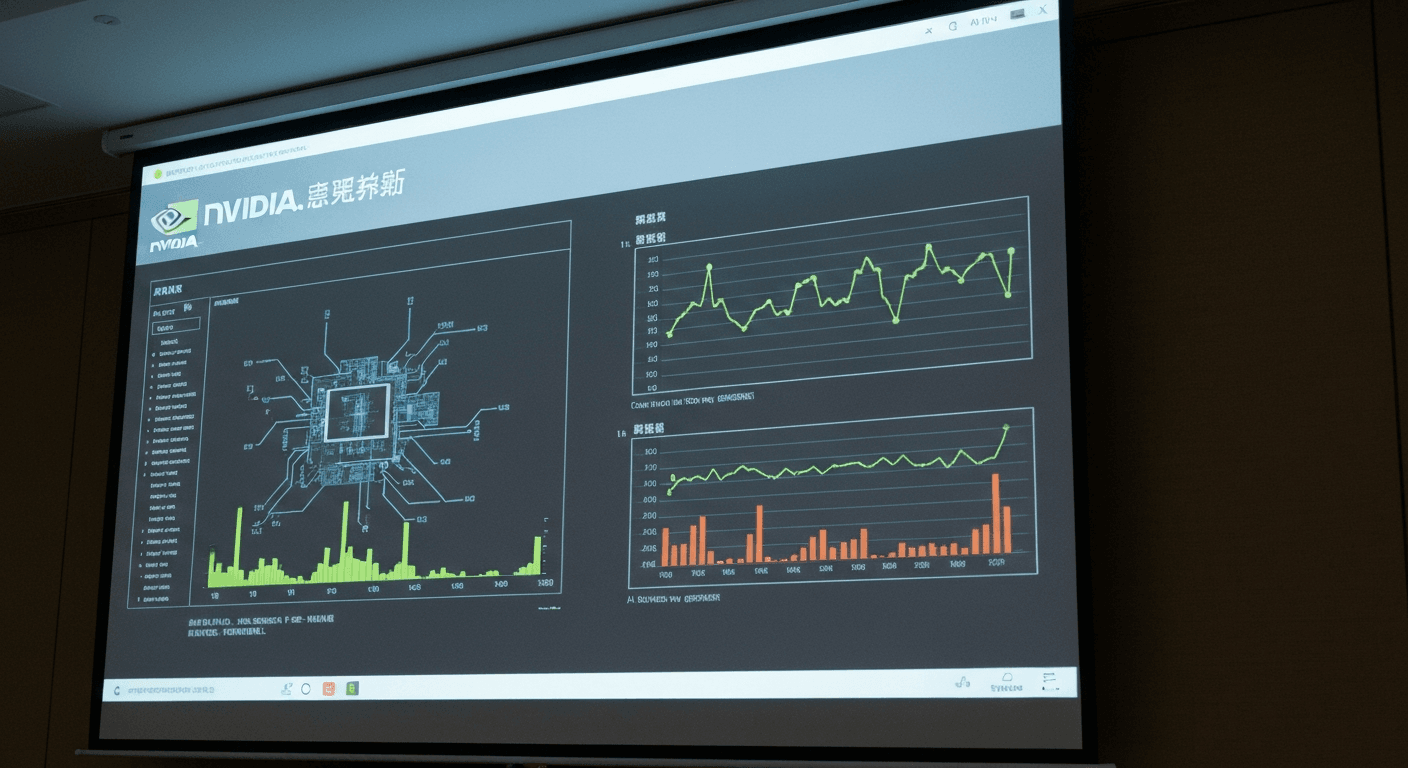
The relentless march of artificial intelligence continues to reshape the global technology landscape, creating both opportunities and challenges for businesses across various sectors. A seemingly innocuous report regarding Hon Hai Precision Industry Co.'s sales figures reveals a deeper truth about the current state of AI demand and its resilience in the face of geopolitical uncertainty. While the news might appear as a simple financial update, its implications extend far beyond a single company's performance, impacting financial professionals, supply chain strategists, and technology investors alike. The sustained demand for AI infrastructure, exemplified by Hon Hai's results, underscores the critical role of hardware manufacturing in supporting the ongoing AI revolution, demanding a closer examination of its underlying drivers and potential vulnerabilities.
What's Happening: Hon Hai's AI-Fueled Growth
Hon Hai Precision Industry Co., widely known as Foxconn, reported a significant 29.7% increase in quarterly sales. This performance met market expectations and, more importantly, signals continued robust demand for AI-related hardware. Foxconn is a crucial partner for Nvidia, the dominant player in the AI chip market, and its strong sales figures directly reflect the insatiable appetite for Nvidia's GPUs (Graphics Processing Units) that power AI applications. This demand remained strong even amidst the outbreak of conflict in the Middle East, suggesting a decoupling of AI investment from immediate geopolitical shocks. The report highlights that the primary driver of this growth is the increasing adoption of AI across various industries, from cloud computing and data centers to autonomous vehicles and advanced manufacturing. The need for specialized hardware capable of handling the complex computational requirements of AI models is fueling demand for companies like Nvidia and, consequently, its manufacturing partners like Hon Hai. This surge in demand necessitates significant investments in manufacturing capacity, supply chain optimization, and skilled labor to meet the growing needs of the AI industry.
Industry Context: The AI Arms Race and Supply Chain Dependencies
Hon Hai's performance exists within the broader context of a global "AI arms race," where companies and nations are vying for dominance in AI development and deployment. This competition is driving massive investments in AI infrastructure, including data centers, high-performance computing clusters, and specialized hardware. Nvidia's commanding position in the AI chip market has made it a critical linchpin in this race, and its partnerships with manufacturers like Hon Hai are essential for scaling production to meet demand. However, this dependence on a limited number of key suppliers also creates vulnerabilities. Geopolitical tensions, trade restrictions, and potential supply chain disruptions could significantly impact the availability of AI hardware, potentially hindering the progress of AI development and deployment. Competitors like AMD are also vying for market share in the AI chip space, and their success could diversify the supply chain and reduce reliance on a single vendor. Furthermore, companies are exploring alternative AI hardware architectures, such as ASICs (Application-Specific Integrated Circuits), designed for specific AI workloads, which could further reshape the competitive landscape. The rise of cloud-based AI services, offered by companies like Amazon Web Services (AWS), Microsoft Azure, and Google Cloud Platform, also impacts the hardware demand. These cloud providers are investing heavily in their own AI infrastructure, creating both a market for AI chips and a potential alternative to on-premise deployments.
Why This Matters for Professionals: Navigating the AI Investment Landscape
The sustained demand for AI hardware, as evidenced by Hon Hai's sales figures, has significant implications for financial professionals, including accountants, CFOs, and fintech practitioners.
- Accountants and Auditors: Need to understand the accounting treatment of AI-related assets, including hardware, software, and data. Determining the useful life of AI hardware, given the rapid pace of technological advancement, is a critical consideration. Furthermore, auditors need to assess the risks associated with supply chain dependencies and potential disruptions in the availability of AI hardware. Understanding the revenue recognition models for AI-powered services and products is also crucial.
- CFOs: Must strategically allocate capital to AI initiatives, balancing the potential benefits with the risks and costs. Evaluating the ROI of AI investments requires a deep understanding of the technology and its potential impact on the business. CFOs need to consider the financial implications of different AI deployment models, such as on-premise vs. cloud-based solutions. They also need to assess the potential for AI to automate financial processes, improve forecasting accuracy, and enhance decision-making.
- Fintech Practitioners: Need to understand the impact of AI on financial services, including fraud detection, risk management, and customer service. Developing and deploying AI-powered fintech solutions requires access to specialized hardware and software, and fintech companies need to carefully evaluate the costs and benefits of different technology options. Understanding the regulatory landscape for AI in finance is also crucial, as regulators are increasingly scrutinizing the use of AI in areas such as lending and investment management.
Action Items:
- Conduct a thorough risk assessment of AI supply chain dependencies. Identify potential vulnerabilities and develop contingency plans to mitigate the impact of disruptions.
- Evaluate the accounting treatment of AI-related assets and develop appropriate depreciation policies. Consult with accounting experts to ensure compliance with relevant accounting standards (e.g., FASB standards).
- Develop a comprehensive AI investment strategy that aligns with the company's overall business goals. Consider the financial implications of different AI deployment models and technology options.
- Stay informed about the regulatory landscape for AI in finance and ensure compliance with relevant regulations. Monitor developments from regulatory bodies such as the SEC and the Financial Conduct Authority (FCA).
- Invest in training and education to develop the skills needed to manage AI-related risks and opportunities.
The Bottom Line: Future Growth Hinges on Supply Chain Resilience
The continued strong performance of Hon Hai, driven by AI hardware demand, highlights the critical role of manufacturing in the AI ecosystem. However, this growth is not without its challenges. The reliance on a limited number of key suppliers, particularly in the chip market, creates vulnerabilities that need to be addressed. Diversifying the supply chain, exploring alternative hardware architectures, and investing in domestic manufacturing capabilities are all crucial steps to ensure the long-term sustainability of the AI industry. The ongoing geopolitical tensions and trade restrictions add further complexity to the situation, requiring companies to be proactive in managing their supply chain risks. The future growth of the AI industry depends on building a resilient and diversified supply chain that can withstand geopolitical shocks and technological disruptions.
Fintech.News Desk
Editorial TeamThe Fintech.News Desk covers the latest developments in fintech, accounting technology, tax regulation, and AI in finance. We combine AI-assisted research with editorial review to deliver analytical news coverage for finance professionals.
Enjoyed this article?
Get stories like this first on our Telegram channel. Subscribed by thousands of fintech leaders.
Join us on TelegramRead Next

AI Is Cracking Open Banking Before Quantum Gets the Chance
AI vs Quantum in Open Banking security: Discover how AI is revolutionizing cybersecurity for fintech & accounting, addressing threats before quantum computing.

Banks Face Complex Cyber Risks From Anthropic’s Mythos
Anthropic's Mythos AI poses complex cyber risks for banks. Learn how this tech impacts fraud, security, & compliance in fintech. Stay ahead of threats.

OpenAI has bought AI personal finance startup Hiro
OpenAI acquires Hiro! Explore the implications of this AI personal finance startup acquisition for fintech, accounting, and personalized financial advice.

How AI Is Rewriting Credit Decisioning in Real Time
AI is revolutionizing credit decisions! Learn how real-time data & AI algorithms are replacing static scorecards for faster, smarter risk assessment.

White House Tells Banks to Use Anthropic to Spot Vulnerabilities
White House urges banks like JPMorgan to test Anthropic's Mythos AI for vulnerability detection. Learn how this impacts fintech & accounting.

EY Rolls Out Agentic AI in Assurance Across Its Global Network of Accounting Firms
EY deploys agentic AI for assurance globally. Learn how this tech impacts audit efficiency, risk management, and the future of accounting.
More in this topic

Regulators Propose Audit-Ready Controls to Govern AI

Anthropic says Claude Code subscribers will need to pay extra for OpenClaw usage
Microsoft Pledges $5.5 Billion AI Investment in Singapore

Daylit Launches AI Agents for Automated Collections