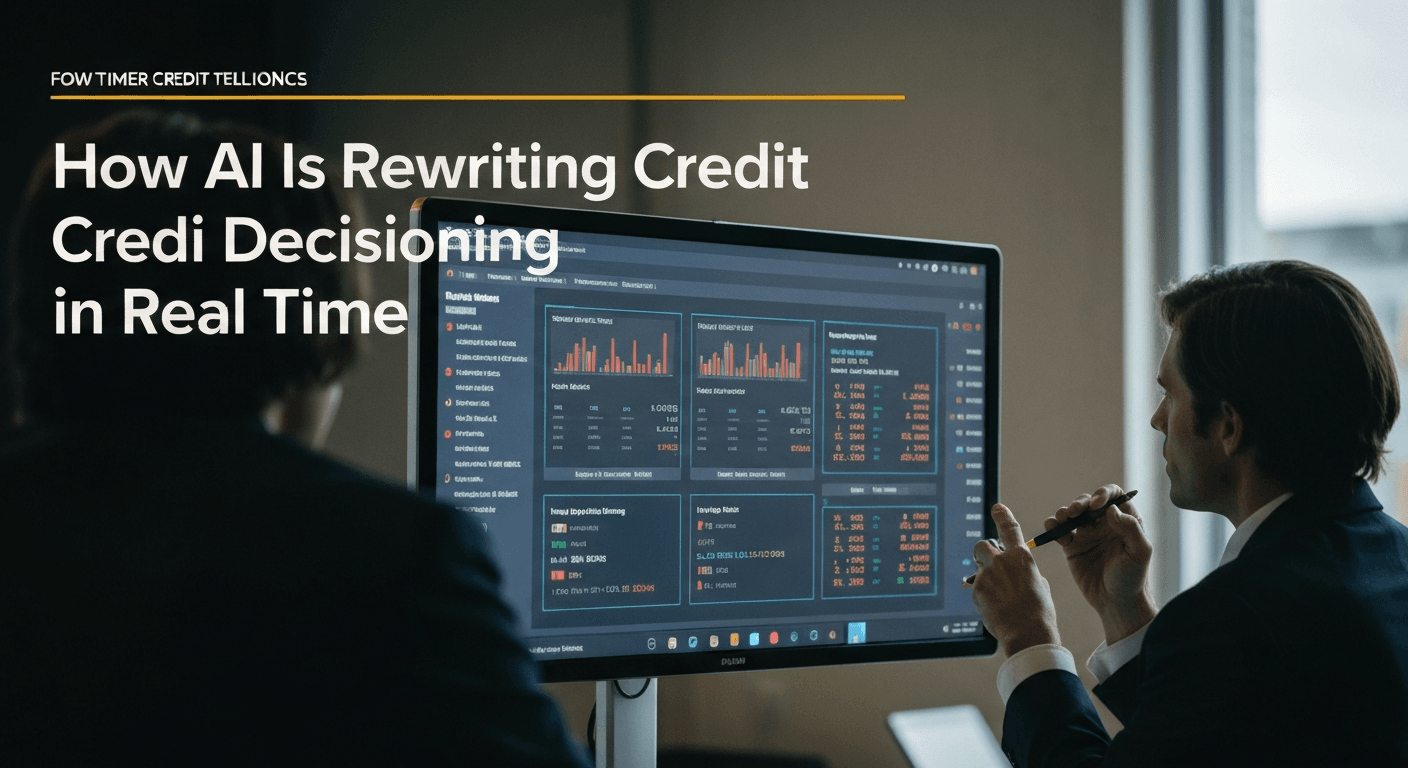
The Rise of AI-Powered Credit Decisioning: Moving Beyond Static Scorecards
The financial services industry is undergoing a profound transformation in how credit and payment decisions are made. The days of relying solely on static scorecards and rigid rule-based systems are rapidly fading, replaced by dynamic, AI-driven models capable of evaluating risk and intent in real time. This shift is being fueled by the increasing speed and complexity of digital transactions, which demand immediate and nuanced assessments that traditional methods simply cannot provide.
Limitations of Traditional Credit Scoring and the Need for Real-Time Analysis
Traditional credit scoring models, often based on FICO scores and similar metrics, primarily assess a borrower's past credit behavior. While valuable, these scores offer a limited snapshot of an individual's current financial situation and fail to capture the intent or context surrounding a specific transaction. For example, a sudden increase in spending could be flagged as risky behavior, even if it's a legitimate purchase or investment. These models, built on historical data, struggle to adapt to the rapidly evolving landscape of digital payments and the increasing sophistication of fraud attempts. The "if-then" logic that underpins these systems is also inherently inflexible, making it difficult to respond to novel situations or emerging trends. This inflexibility leads to both missed opportunities (denying credit to potentially reliable borrowers) and increased risk (failing to detect sophisticated fraud).
The need for real-time analysis is particularly acute in the digital payments ecosystem. Transactions now occur across a multitude of channels, often instantaneously. Issuers need to evaluate the risk associated with each transaction within milliseconds to prevent fraud, minimize losses, and maintain a seamless customer experience. Delays in processing or inaccurate risk assessments can lead to customer frustration, abandoned transactions, and reputational damage. Furthermore, the rise of alternative payment methods, such as buy now, pay later (BNPL) and cryptocurrency, introduces new complexities that traditional credit scoring models are ill-equipped to handle.
How AI is Reshaping Credit Decisioning
Artificial intelligence, particularly machine learning, offers a powerful solution to the limitations of traditional credit scoring. AI algorithms can analyze vast amounts of data from diverse sources, including transaction history, social media activity, geolocation data, and device information, to identify patterns and predict future behavior with greater accuracy. These models can also learn and adapt in real time, continuously improving their performance as new data becomes available.
One key advantage of AI is its ability to detect subtle anomalies that might be missed by rule-based systems. For example, an AI model could identify a fraudulent transaction based on a combination of factors, such as the time of day, the location of the transaction, the type of merchant, and the user's browsing history. By analyzing these factors holistically, AI can provide a more nuanced and accurate assessment of risk than traditional methods.
Furthermore, AI can personalize credit decisions based on individual circumstances. Instead of applying a one-size-fits-all approach, AI models can tailor credit limits, interest rates, and repayment terms to each borrower's specific needs and risk profile. This personalization can lead to increased customer satisfaction, reduced default rates, and improved profitability for lenders.
The Role of Alternative Data in AI-Powered Credit Models
The effectiveness of AI-powered credit models hinges on the availability of high-quality data. In addition to traditional credit bureau data, lenders are increasingly turning to alternative data sources to enhance their risk assessments. These sources can include bank account information, utility bill payments, rent payments, and even social media activity.
By incorporating alternative data, lenders can gain a more complete picture of a borrower's financial health and ability to repay their debts. This is particularly important for individuals with limited or no credit history, such as young adults and immigrants, who may be underserved by traditional credit scoring models. However, the use of alternative data also raises ethical concerns about privacy and fairness. Lenders must ensure that they are using data responsibly and transparently, and that their AI models are not biased against certain demographic groups. Regulatory bodies like the Consumer Financial Protection Bureau (CFPB) are actively monitoring the use of AI in credit decisioning to prevent discriminatory practices.
Implications for Financial Institutions and Consumers
The shift towards AI-powered credit decisioning has significant implications for both financial institutions and consumers. For lenders, AI offers the potential to improve risk management, reduce fraud losses, increase efficiency, and enhance customer satisfaction. However, it also requires significant investments in technology, data infrastructure, and talent. Lenders must also be prepared to address the ethical and regulatory challenges associated with the use of AI.
For consumers, AI can lead to more personalized and accessible credit products. However, it also raises concerns about transparency and fairness. Consumers need to understand how their data is being used and how AI models are making decisions that affect their financial lives. They also need to be protected from discriminatory practices and unfair outcomes. Increased transparency and explainability of AI models are crucial for building trust and ensuring that consumers are treated fairly.
Looking Ahead: The Future of Credit Decisioning
The trend towards AI-powered credit decisioning is likely to accelerate in the coming years. As AI technology continues to evolve and data becomes more readily available, we can expect to see even more sophisticated and personalized credit products emerge. The integration of blockchain technology could also play a role, providing a secure and transparent platform for sharing credit information. However, the responsible and ethical use of AI will be paramount. Regulators, lenders, and consumers must work together to ensure that AI is used to create a more inclusive and equitable financial system.
The future of credit decisioning lies in the intelligent application of AI to create faster, more accurate, and more personalized financial services.
Fintech.News Desk
Editorial TeamThe Fintech.News Desk covers the latest developments in fintech, accounting technology, tax regulation, and AI in finance. We combine AI-assisted research with editorial review to deliver analytical news coverage for finance professionals.
Enjoyed this article?
Get stories like this first on our Telegram channel. Subscribed by thousands of fintech leaders.
Join us on TelegramRead Next

AI Is Cracking Open Banking Before Quantum Gets the Chance
AI vs Quantum in Open Banking security: Discover how AI is revolutionizing cybersecurity for fintech & accounting, addressing threats before quantum computing.

Banks Face Complex Cyber Risks From Anthropic’s Mythos
Anthropic's Mythos AI poses complex cyber risks for banks. Learn how this tech impacts fraud, security, & compliance in fintech. Stay ahead of threats.

OpenAI has bought AI personal finance startup Hiro
OpenAI acquires Hiro! Explore the implications of this AI personal finance startup acquisition for fintech, accounting, and personalized financial advice.
White House Tells Banks to Use Anthropic to Spot Vulnerabilities
White House urges banks like JPMorgan to test Anthropic's Mythos AI for vulnerability detection. Learn how this impacts fintech & accounting.

EY Rolls Out Agentic AI in Assurance Across Its Global Network of Accounting Firms
EY deploys agentic AI for assurance globally. Learn how this tech impacts audit efficiency, risk management, and the future of accounting.

Regulators Propose Audit-Ready Controls to Govern AI
AI in finance faces new scrutiny. Proposed audit-ready controls aim to govern AI in banking & payments. Learn how these regulations impact your fintech accounti
More in this topic

Nvidia Partner Hon Hai’s Sales Meet Estimates on Solid AI Demand

Anthropic says Claude Code subscribers will need to pay extra for OpenClaw usage

Microsoft Pledges $5.5 Billion AI Investment in Singapore

Daylit Launches AI Agents for Automated Collections