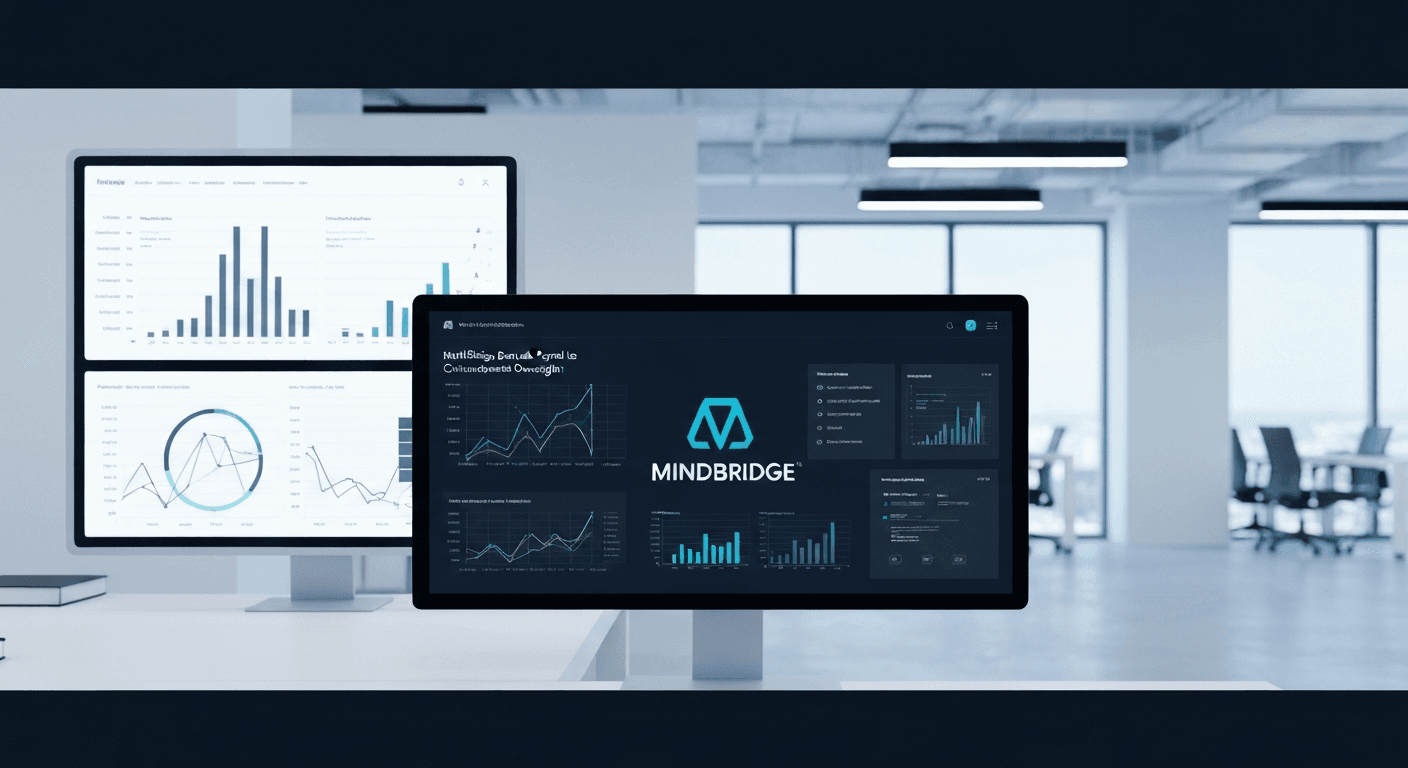
The world of financial oversight is undergoing a seismic shift, driven by the convergence of advanced technologies, increasing regulatory scrutiny, and the relentless pressure to enhance efficiency and accuracy. The traditional methods of auditing and financial analysis, often retrospective and sample-based, are increasingly inadequate to address the complexities and speed of modern business. This necessitates a move towards continuous monitoring and real-time insights, a paradigm shift that demands innovative solutions and a more proactive approach to risk management. The announcement of MindBridge's developer portal signals a crucial step in enabling this transformation, offering a pathway for seamless integration of continuous financial oversight into existing systems and workflows.
What's Happening: MindBridge Opens the Door to Integration
MindBridge, a player in the AI-powered financial risk detection space, has launched a developer portal designed to facilitate the integration of its platform with other software and systems. This technical hub provides developers, partners, and enterprise teams with the resources and documentation needed to embed continuous financial oversight directly into their existing infrastructure. The portal offers access to APIs, SDKs, and comprehensive documentation, enabling developers to build custom integrations tailored to specific business needs. This move aims to democratize access to advanced financial risk detection capabilities, making them more readily available to a broader range of organizations.
The key benefit is the ability to automate and streamline the process of financial oversight. Instead of relying on periodic audits and manual reviews, organizations can leverage MindBridge's AI-powered analytics to continuously monitor transactions and identify potential risks in real-time. This proactive approach allows for faster detection of anomalies, reduced risk of fraud and errors, and improved overall financial governance. The portal simplifies the integration process, reducing the time and resources required to implement continuous monitoring capabilities. This, in turn, lowers the barrier to entry for smaller and mid-sized businesses that may lack the resources for complex, bespoke integrations. The availability of clear documentation and support further empowers developers to create robust and reliable integrations.
Industry Context: The Rise of Embedded Finance and Continuous Controls Monitoring
MindBridge's developer portal aligns with two significant trends in the financial technology landscape: the rise of embedded finance and the growing adoption of continuous controls monitoring (CCM). Embedded finance refers to the integration of financial services into non-financial platforms and applications, creating seamless and convenient user experiences. By providing a developer portal, MindBridge is enabling its technology to be embedded within a wider range of applications, extending its reach beyond traditional accounting software.
Continuous Controls Monitoring (CCM), as defined by organizations like ISACA, involves the automated monitoring of internal controls to identify and address weaknesses in real-time. This approach contrasts with traditional periodic audits, which provide a snapshot of control effectiveness at a specific point in time. CCM solutions leverage technology to continuously assess the design and operating effectiveness of controls, providing early warning signals of potential problems. The MindBridge developer portal facilitates the implementation of CCM by enabling organizations to integrate its AI-powered risk detection capabilities into their existing control frameworks.
Several other companies are also focusing on continuous monitoring and integration. BlackLine, for example, offers solutions for automating accounting processes and providing real-time visibility into financial data. While BlackLine focuses on automation of core accounting tasks, MindBridge emphasizes risk detection and anomaly identification. Similarly, companies like AuditBoard provide platforms for managing audit, risk, and compliance activities, but their focus is broader than the specific area of AI-powered financial risk detection. The MindBridge portal differentiates itself by specifically targeting developers and providing the tools needed to build custom integrations, allowing organizations to tailor the solution to their unique needs.
The SEC's increasing emphasis on internal controls, particularly in the wake of accounting scandals like Enron and WorldCom, has further fueled the demand for CCM solutions. Section 404 of the Sarbanes-Oxley Act (SOX) requires companies to establish and maintain adequate internal controls over financial reporting. Continuous monitoring can help organizations meet these requirements by providing ongoing assurance that controls are operating effectively. The IRS also benefits from enhanced financial oversight, as it can improve tax compliance and reduce the risk of tax evasion.
Why This Matters for Professionals: Practical Impact and Considerations
The MindBridge developer portal has significant implications for accounting professionals, CFOs, and fintech practitioners. For accountants, it provides a tool to enhance the efficiency and effectiveness of their work. By integrating MindBridge's technology into their existing workflows, accountants can automate routine tasks, identify potential errors and fraud more quickly, and focus on higher-value activities such as analysis and advisory services. This shift requires accountants to develop new skills in data analysis and technology integration.
CFOs can leverage the developer portal to gain greater visibility into their organization's financial health. By implementing continuous monitoring, they can proactively identify and address potential risks, improve financial governance, and make more informed decisions. This requires CFOs to embrace a more data-driven approach to financial management and to invest in the technologies and skills needed to support continuous monitoring.
Fintech practitioners can use the developer portal to build innovative solutions that integrate financial risk detection into a wider range of applications. This can lead to the development of new products and services that improve financial transparency, reduce risk, and enhance the user experience.
Here are some specific action items and considerations for professionals:
- Assess current financial oversight processes: Identify areas where continuous monitoring can improve efficiency and effectiveness.
- Evaluate the MindBridge developer portal: Determine if it aligns with your organization's needs and technical capabilities.
- Develop a plan for integration: Identify the systems and applications that you want to integrate with MindBridge.
- Train staff on data analysis and technology integration: Ensure that your team has the skills needed to leverage continuous monitoring effectively.
- Consult with experts: Seek guidance from consultants or other professionals with experience in continuous controls monitoring and AI-powered risk detection.
The Bottom Line: Towards Continuous Financial Intelligence
The launch of MindBridge's developer portal represents a significant step towards democratizing access to AI-powered financial risk detection. By enabling seamless integration with existing systems, this initiative empowers organizations to move beyond traditional, retrospective audits and embrace a more proactive and continuous approach to financial oversight. The trend toward continuous monitoring aligns with increasing regulatory scrutiny and the growing demand for greater transparency and accountability in financial reporting. The future of financial oversight lies in leveraging technology to gain real-time insights and proactively manage risk.
The MindBridge developer portal empowers organizations to build continuous financial intelligence into their core systems, fostering greater transparency and proactive risk management.
Fintech.News Desk
Editorial TeamThe Fintech.News Desk covers the latest developments in fintech, accounting technology, tax regulation, and AI in finance. We combine AI-assisted research with editorial review to deliver analytical news coverage for finance professionals.
Enjoyed this article?
Get stories like this first on our Telegram channel. Subscribed by thousands of fintech leaders.
Join us on TelegramRead Next
AI Is Cracking Open Banking Before Quantum Gets the Chance
AI vs Quantum in Open Banking security: Discover how AI is revolutionizing cybersecurity for fintech & accounting, addressing threats before quantum computing.

Banks Face Complex Cyber Risks From Anthropic’s Mythos
Anthropic's Mythos AI poses complex cyber risks for banks. Learn how this tech impacts fraud, security, & compliance in fintech. Stay ahead of threats.

OpenAI has bought AI personal finance startup Hiro
OpenAI acquires Hiro! Explore the implications of this AI personal finance startup acquisition for fintech, accounting, and personalized financial advice.
How AI Is Rewriting Credit Decisioning in Real Time
AI is revolutionizing credit decisions! Learn how real-time data & AI algorithms are replacing static scorecards for faster, smarter risk assessment.
White House Tells Banks to Use Anthropic to Spot Vulnerabilities
White House urges banks like JPMorgan to test Anthropic's Mythos AI for vulnerability detection. Learn how this impacts fintech & accounting.

EY Rolls Out Agentic AI in Assurance Across Its Global Network of Accounting Firms
EY deploys agentic AI for assurance globally. Learn how this tech impacts audit efficiency, risk management, and the future of accounting.
More in this topic
Regulators Propose Audit-Ready Controls to Govern AI
Nvidia Partner Hon Hai’s Sales Meet Estimates on Solid AI Demand

Anthropic says Claude Code subscribers will need to pay extra for OpenClaw usage
Microsoft Pledges $5.5 Billion AI Investment in Singapore
Daylit Launches AI Agents for Automated Collections