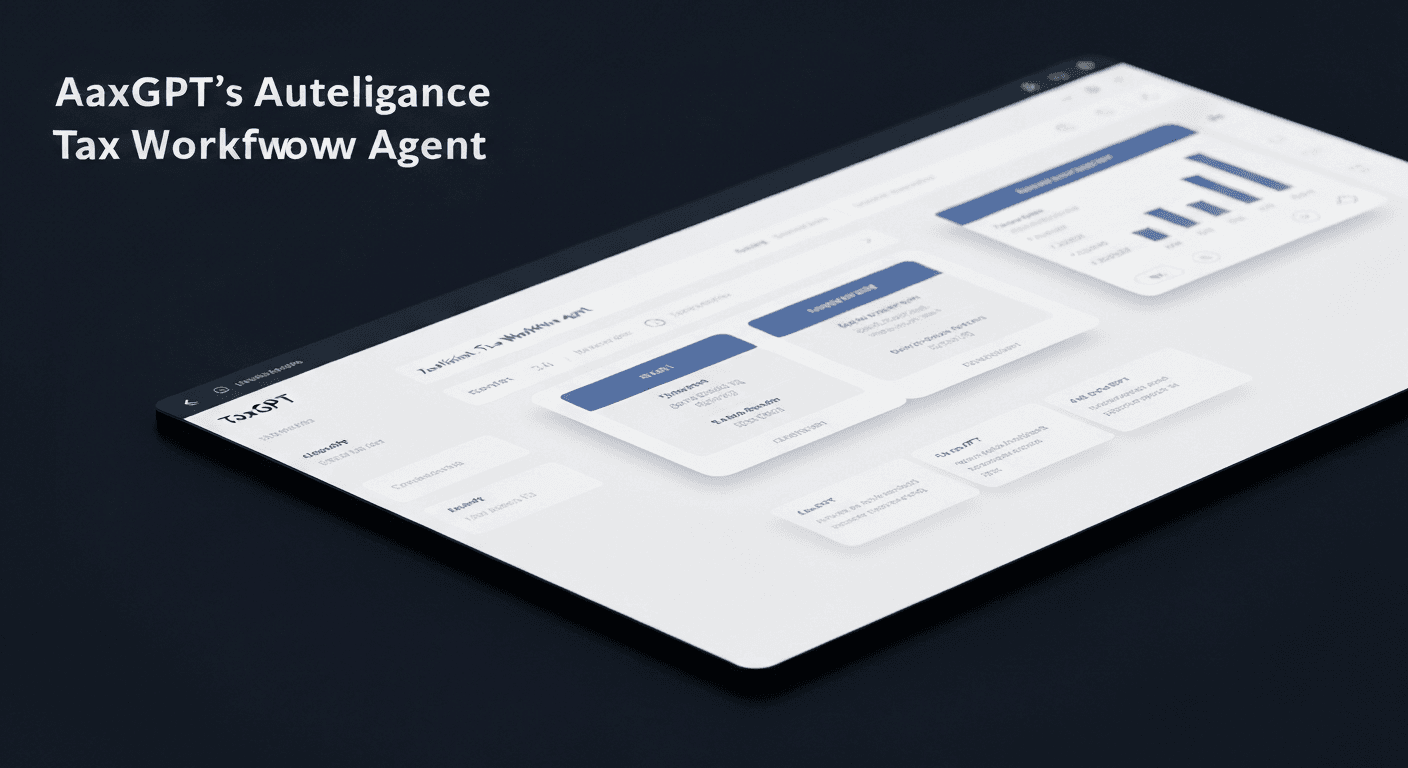
The accounting and tax preparation landscape is on the cusp of a seismic shift, driven by the relentless advance of artificial intelligence. For decades, the industry has relied on human expertise and manual processes, but the emergence of sophisticated AI tools promises to automate significant portions of the tax workflow, potentially reshaping the roles and responsibilities of tax professionals. This isn't just about incremental efficiency gains; it's about a fundamental re-evaluation of how tax services are delivered and consumed. The launch of autonomous tax workflow agents represents a critical inflection point, compelling practitioners to adapt or risk being left behind. The implications extend beyond individual firms, impacting regulatory oversight, data security protocols, and the very definition of tax expertise. The speed of adoption and the ultimate impact on the profession remain to be seen, but one thing is certain: the future of tax is inextricably linked to the evolution of AI.
What's Happening
TaxGPT, a company specializing in AI-driven solutions for the accounting industry, has announced the release of its Tax Prep Agent. This agent is described as an autonomous AI system capable of handling the entire tax preparation process, from initial document review to final return filing. According to TaxGPT, the agent can ingest various source documents (e.g., W-2s, 1099s, bank statements) and intelligently extract relevant data. Critically, the system is designed to interact with existing tax software platforms in a manner that mimics a human preparer. This means the AI can navigate the software interface, enter data into the correct fields, and perform necessary calculations. TaxGPT emphasizes the security aspect of the agent, promising a secure environment for handling sensitive financial information. The company positions this as a "first-to-market" solution, suggesting it is the first fully autonomous AI capable of end-to-end tax preparation. The claim of autonomy differentiates it from existing tax software that automates specific tasks, but still requires significant human intervention. This development has the potential to significantly reduce the time and cost associated with tax preparation, while also minimizing the risk of human error.
Industry Context
The TaxGPT announcement arrives amidst a broader trend of AI adoption in the financial services sector. Large language models (LLMs) and other AI technologies are increasingly being deployed for tasks such as fraud detection, risk assessment, and customer service. In the accounting domain, AI has already found applications in areas such as invoice processing, expense management, and audit analytics. However, the TaxGPT agent represents a more ambitious step towards full automation.
Several companies are already offering AI-powered solutions that support tax professionals. For example, Avalara focuses on automating sales tax compliance, while Thomson Reuters offers AI-driven tools for tax research and planning. These solutions typically augment human capabilities rather than replacing them entirely. In contrast, TaxGPT's agent aims to perform the complete tax preparation workflow autonomously, setting it apart from existing offerings.
The development of autonomous tax preparation agents is also influenced by regulatory trends. The IRS has been actively exploring the use of AI to improve tax compliance and detect fraud. Furthermore, the increasing complexity of tax laws and regulations creates a growing demand for efficient and accurate tax preparation services. The TaxGPT agent could potentially address this demand by automating routine tasks and freeing up tax professionals to focus on more complex and strategic advisory services.
The emergence of similar technologies from competitors is all but guaranteed. We can expect Intuit (TurboTax, QuickBooks) and H&R Block to accelerate their AI development efforts, potentially through acquisitions or internal innovation. The competitive landscape will likely evolve rapidly in the coming years, with companies vying to offer the most comprehensive and user-friendly AI-powered tax solutions.
Why This Matters for Professionals
The launch of TaxGPT's Tax Prep Agent has profound implications for tax professionals. While the agent promises to improve efficiency and reduce costs, it also raises concerns about job displacement and the changing role of the accountant. Here are some key considerations for professionals:
- Embrace Learning and Adaptation: Tax professionals should proactively invest in learning about AI technologies and how they can be applied to their work. This includes understanding the capabilities and limitations of autonomous tax agents, as well as exploring opportunities to integrate AI tools into their existing workflows.
- Focus on Higher-Value Services: As AI automates routine tasks, tax professionals should focus on providing higher-value services such as tax planning, financial advisory, and strategic consulting. These services require human judgment, critical thinking, and the ability to build strong client relationships – skills that are difficult for AI to replicate.
- Data Security and Privacy: With the increasing reliance on AI, data security and privacy become paramount. Tax professionals must ensure that they are using secure AI platforms and that they have appropriate safeguards in place to protect client data. They should also stay informed about relevant regulations and compliance requirements, such as IRS Publication 4557, Safeguarding Taxpayer Data.
- Continuous Education and Upskilling: The tax landscape is constantly evolving, and tax professionals must commit to continuous education and upskilling to stay ahead of the curve. This includes staying abreast of new tax laws and regulations, as well as developing expertise in emerging areas such as cryptocurrency taxation and international tax planning.
Action Items:
- Research and experiment with AI-powered tax tools and platforms.
- Develop a plan to integrate AI into your current tax workflow.
- Invest in training and development to enhance your skills in tax planning and advisory services.
- Review your data security and privacy protocols to ensure compliance with relevant regulations.
The Bottom Line
The TaxGPT Tax Prep Agent signals a significant shift towards automation in the tax preparation industry. While the extent of its immediate impact remains to be seen, it is clear that AI will play an increasingly important role in the future of tax. The key for tax professionals is to embrace these changes, adapt their skills, and focus on providing value-added services that complement AI-driven automation. The future belongs to those who can effectively integrate human expertise with the power of artificial intelligence.
The rise of autonomous tax workflow agents necessitates a proactive and adaptive approach from tax professionals to leverage the technology while focusing on higher-value advisory services.
Fintech.News Desk
Editorial TeamThe Fintech.News Desk covers the latest developments in fintech, accounting technology, tax regulation, and AI in finance. We combine AI-assisted research with editorial review to deliver analytical news coverage for finance professionals.
Enjoyed this article?
Get stories like this first on our Telegram channel. Subscribed by thousands of fintech leaders.
Join us on TelegramRead Next
AI Is Cracking Open Banking Before Quantum Gets the Chance
AI vs Quantum in Open Banking security: Discover how AI is revolutionizing cybersecurity for fintech & accounting, addressing threats before quantum computing.

Banks Face Complex Cyber Risks From Anthropic’s Mythos
Anthropic's Mythos AI poses complex cyber risks for banks. Learn how this tech impacts fraud, security, & compliance in fintech. Stay ahead of threats.

OpenAI has bought AI personal finance startup Hiro
OpenAI acquires Hiro! Explore the implications of this AI personal finance startup acquisition for fintech, accounting, and personalized financial advice.
How AI Is Rewriting Credit Decisioning in Real Time
AI is revolutionizing credit decisions! Learn how real-time data & AI algorithms are replacing static scorecards for faster, smarter risk assessment.
White House Tells Banks to Use Anthropic to Spot Vulnerabilities
White House urges banks like JPMorgan to test Anthropic's Mythos AI for vulnerability detection. Learn how this impacts fintech & accounting.
EY Rolls Out Agentic AI in Assurance Across Its Global Network of Accounting Firms
EY deploys agentic AI for assurance globally. Learn how this tech impacts audit efficiency, risk management, and the future of accounting.
More in this topic
Regulators Propose Audit-Ready Controls to Govern AI
Nvidia Partner Hon Hai’s Sales Meet Estimates on Solid AI Demand

Anthropic says Claude Code subscribers will need to pay extra for OpenClaw usage
Microsoft Pledges $5.5 Billion AI Investment in Singapore
Daylit Launches AI Agents for Automated Collections